Complete Kitchen Unit Conversion Guide
The only conversion chart you need for cooking. Convert between cups, grams, ounces, milliliters, and temperatures instantly.
You found a gorgeous pasta recipe from an Italian food blog. The ingredients are all in grams and milliliters. Your measuring cups are staring back at you. You open three browser tabs, second-guess yourself halfway through, and end up with a sauce that is either twice as salty or half as flavorful as it should have been.
This happens to home cooks every single day, and not because they lack skill. It happens because the world of cooking uses two measurement systems — metric and imperial — and recipes cross between them constantly without apology.
The metric system (grams, milliliters, Celsius) is used across most of Europe, Asia, South America, and Australia. The imperial system (ounces, cups, Fahrenheit) remains dominant in the United States and, to varying degrees, the United Kingdom. When you cook from recipes around the world — which is increasingly the norm — you will hit conversion problems regularly.
This guide gives you every conversion table you need for volume, weight, and temperature, plus a reference chart for common ingredients. Bookmark it, print it, or keep it open on your phone while you cook.
Free Tool
Kitchen Unit Converter
Convert between any cooking measurements instantly with our free tool.
Volume Conversions
Volume is what you measure when you use cups, tablespoons, teaspoons, and fluid ounces. These units show up constantly in American and British recipes, while European recipes almost always use milliliters or liters.
One important distinction: fluid ounces measure volume, not weight. A fluid ounce of water and a fluid ounce of honey both occupy the same space, but they weigh very different amounts. Keep that in mind when a recipe is ambiguous.
| Measurement | Milliliters (ml) | Fluid Ounces (fl oz) | Tablespoons | Teaspoons |
|---|---|---|---|---|
| 1 teaspoon | 5 ml | 0.17 fl oz | 1/3 tbsp | 1 tsp |
| 1 tablespoon | 15 ml | 0.5 fl oz | 1 tbsp | 3 tsp |
| 1/8 cup | 30 ml | 1 fl oz | 2 tbsp | 6 tsp |
| 1/4 cup | 60 ml | 2 fl oz | 4 tbsp | 12 tsp |
| 1/3 cup | 80 ml | 2.7 fl oz | 5.3 tbsp | 16 tsp |
| 1/2 cup | 120 ml | 4 fl oz | 8 tbsp | 24 tsp |
| 3/4 cup | 180 ml | 6 fl oz | 12 tbsp | 36 tsp |
| 1 cup | 240 ml | 8 fl oz | 16 tbsp | 48 tsp |
| 2 cups (1 pint) | 480 ml | 16 fl oz | 32 tbsp | — |
| 4 cups (1 quart) | 960 ml | 32 fl oz | 64 tbsp | — |
| 1 liter | 1000 ml | 33.8 fl oz | ~67 tbsp | — |
Quick reference for the most common conversions:
- 1 cup = 240 ml
- 1 tablespoon = 15 ml
- 1 teaspoon = 5 ml
Note that the US cup (240 ml) differs slightly from the metric cup (250 ml) used in Australia and Canada. For most recipes the difference is negligible, but in precision baking it can matter. When in doubt, use milliliters.
Weight Conversions
Weight measurements — grams, ounces, and pounds — appear in recipes for both dry and wet ingredients. Professional bakers rely on weight almost exclusively because it eliminates the inconsistency of how loosely or tightly ingredients are packed into a measuring cup.
| Grams (g) | Ounces (oz) | Pounds (lb) |
|---|---|---|
| 1 g | 0.035 oz | — |
| 10 g | 0.35 oz | — |
| 25 g | 0.88 oz | — |
| 28 g | 1 oz | 0.063 lb |
| 50 g | 1.76 oz | 0.11 lb |
| 100 g | 3.53 oz | 0.22 lb |
| 115 g | 4 oz | 0.25 lb (1/4 lb) |
| 225 g | 8 oz | 0.5 lb |
| 250 g | 8.82 oz | 0.55 lb |
| 340 g | 12 oz | 0.75 lb |
| 450 g | 16 oz | 1 lb |
| 500 g | 17.6 oz | 1.1 lb |
| 1 kg | 35.27 oz | 2.2 lb |
The key conversion to memorize: 1 ounce = 28 grams (28.35 to be precise, but 28 works for everyday cooking).
Tip
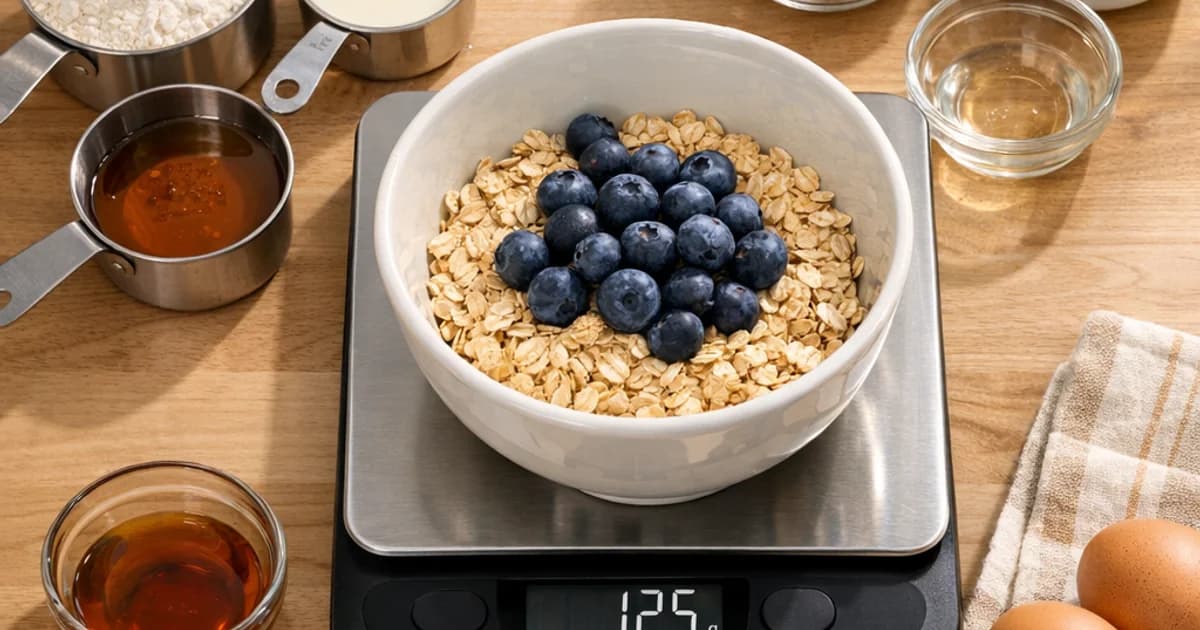
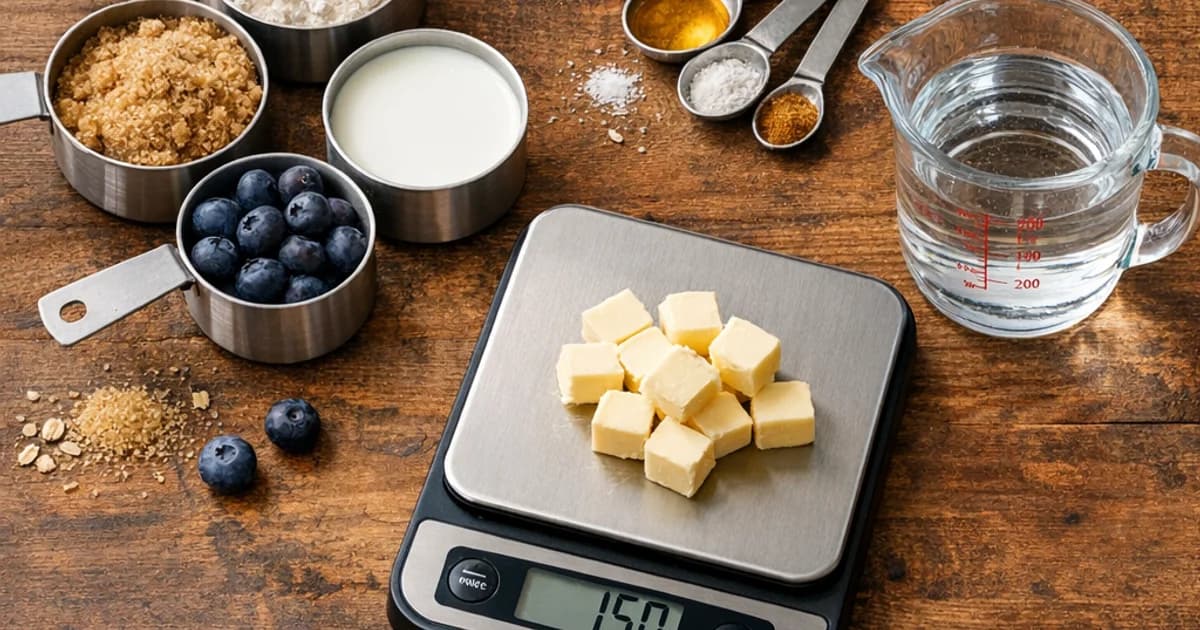
Weight measurements are significantly more accurate than volume measurements for baking. A cup of all-purpose flour can weigh anywhere from 120 g to 160 g depending on how it was scooped, whether it was sifted, and even the humidity in your kitchen. That 40 g difference — a full third of the intended amount — can be the reason your bread is dense or your cake collapses. If you bake regularly, a digital kitchen scale is one of the most worthwhile investments you can make. Most scales cost under $15 and will improve your results immediately.
Temperature Conversions
Temperature is one of the most consequential conversions in cooking. Being off by 25°F (about 14°C) can mean the difference between a perfectly browned crust and a raw center, or between a gently simmered sauce and a scorched one.
American recipes use Fahrenheit. Most of the rest of the world uses Celsius. British and some Australian recipes also reference Gas Mark, a numbered dial system found on older gas ovens.
| Description | Fahrenheit (°F) | Celsius (°C) | Gas Mark |
|---|---|---|---|
| Very low oven | 250°F | 120°C | Gas 1/2 |
| Low oven | 300°F | 150°C | Gas 2 |
| Moderate oven | 325°F | 160°C | Gas 3 |
| Moderate oven | 350°F | 175°C | Gas 4 |
| Moderately hot oven | 375°F | 190°C | Gas 5 |
| Hot oven | 400°F | 200°C | Gas 6 |
| Hot oven | 425°F | 220°C | Gas 7 |
| Very hot oven | 450°F | 230°C | Gas 8 |
| Broil / Grill | 500°F+ | 260°C+ | Gas 9+ |
Conversion formulas:
- Fahrenheit to Celsius: subtract 32, then multiply by 5/9
- Example: 350°F → (350 − 32) × 5/9 = 175°C
- Celsius to Fahrenheit: multiply by 9/5, then add 32
- Example: 200°C → (200 × 9/5) + 32 = 392°F ≈ 400°F
Practical shortcut: For oven temperatures in the typical cooking range, subtracting 30 and halving gives a rough Celsius estimate. So 350°F becomes approximately (350 − 30) / 2 = 160°C. It is not exact, but it gets you close enough for most recipes.
If you have a convection or fan oven, reduce the temperature by 25°F (15°C) from whatever the recipe states. Convection ovens circulate air and cook food faster and more evenly than conventional ovens.
Common Ingredient Conversions
The frustrating truth about converting volume to weight is that different ingredients have different densities. One cup of flour weighs far less than one cup of honey. This is why a single "cups to grams" table does not work for every ingredient.
The table below gives you the gram and ounce equivalents for the most frequently used ingredients in home cooking and baking.
| Ingredient | 1 Cup | 1/2 Cup | 1 Tablespoon |
|---|---|---|---|
| All-purpose flour | 125 g / 4.4 oz | 63 g | 8 g |
| Bread flour | 130 g / 4.6 oz | 65 g | 8 g |
| Cake flour | 100 g / 3.5 oz | 50 g | 6 g |
| Whole wheat flour | 120 g / 4.2 oz | 60 g | 8 g |
| White granulated sugar | 200 g / 7 oz | 100 g | 12 g |
| Brown sugar (packed) | 220 g / 7.75 oz | 110 g | 14 g |
| Powdered sugar (sifted) | 120 g / 4.2 oz | 60 g | 8 g |
| Unsalted butter | 227 g / 8 oz | 113 g | 14 g |
| Olive oil | 216 g / 7.6 oz | 108 g | 14 g |
| Honey | 340 g / 12 oz | 170 g | 21 g |
| Water / milk | 240 g / 8.5 oz | 120 g | 15 g |
| Rolled oats | 90 g / 3.2 oz | 45 g | 6 g |
| Cocoa powder | 90 g / 3.2 oz | 45 g | 6 g |
| Salt (table) | 288 g / 10.2 oz | 144 g | 18 g |
| Baking powder | — | — | 12 g |
| Baking soda | — | — | 9 g |
Warning
Never assume one ingredient's cup-to-gram ratio applies to another. A cup of packed brown sugar weighs nearly twice as much as a cup of sifted cake flour. Using a generic conversion of "1 cup = 125 g" for everything — a mistake that appears surprisingly often online — will produce incorrect results for most ingredients. Always look up the specific ingredient, or better yet, use a scale and measure by weight from the start.
Pro Tips for Accurate Measuring
Having the right conversion numbers matters, but so does the technique you use to measure. Here are the practices that separate consistent results from frustrating ones.
Use the spoon-and-level method for dry ingredients. When measuring flour or powdered sugar by volume, spoon the ingredient lightly into the measuring cup until it overflows, then sweep a flat edge (like the back of a butter knife) across the top to level it off. Never scoop directly from the bag — this compresses the ingredient and can add 20 to 30 percent more than the recipe intends.
Tare your scale between ingredients. The tare function (also called zero or reset) resets your scale to zero with a container already on it. This lets you add ingredients directly to a bowl without dirtying separate containers. Add your first ingredient, note the weight, press tare, add the second ingredient, and so on. It saves time and reduces dishes.
Use liquid measuring cups for liquids, dry cups for dry ingredients. Liquid measuring cups have a spout and are designed to be filled to a line while flat on a counter. Dry measuring cups are meant to be overfilled and leveled. Using the wrong type introduces small but consistent measurement errors.
Measure sticky ingredients with oil first. When a recipe calls for both oil and honey or maple syrup, measure the oil first, then use the same cup for the sticky ingredient. The oil coats the cup and the sticky ingredient slides out cleanly, giving you an accurate measurement and making cleanup easier.
Account for altitude if you bake. At altitudes above 3,500 feet (about 1,000 meters), water boils at a lower temperature and leavening agents work differently. Reduce baking powder by about 1/8 teaspoon per teaspoon called for, and consider adding a tablespoon or two of extra liquid. This is not strictly a conversion issue, but it is a measurement adjustment that matters if you live at elevation.
When in doubt, convert to grams. For any recipe where precision matters — bread, pastry, candy, tempering chocolate — convert everything to grams and use a scale. Volume measurements are fine for forgiving recipes like soups and stews. For baking, weight is always more reliable.
Key Takeaway
The most important conversions to have memorized for everyday cooking are: 1 cup equals 240 ml, 1 tablespoon equals 15 ml, 1 teaspoon equals 5 ml, and 1 ounce equals 28 grams. For baking, always prefer weight over volume — a digital kitchen scale eliminates nearly all measurement uncertainty. When converting temperatures, use the full formula for precision, but the shortcut of subtracting 30 and halving works well enough for oven settings.
Knowing your measurements is one part of confident cooking. The other is knowing how to adjust recipes when you are cooking for more or fewer people. For a full walkthrough on proportionally scaling ingredients up or down, read How to Scale a Recipe.
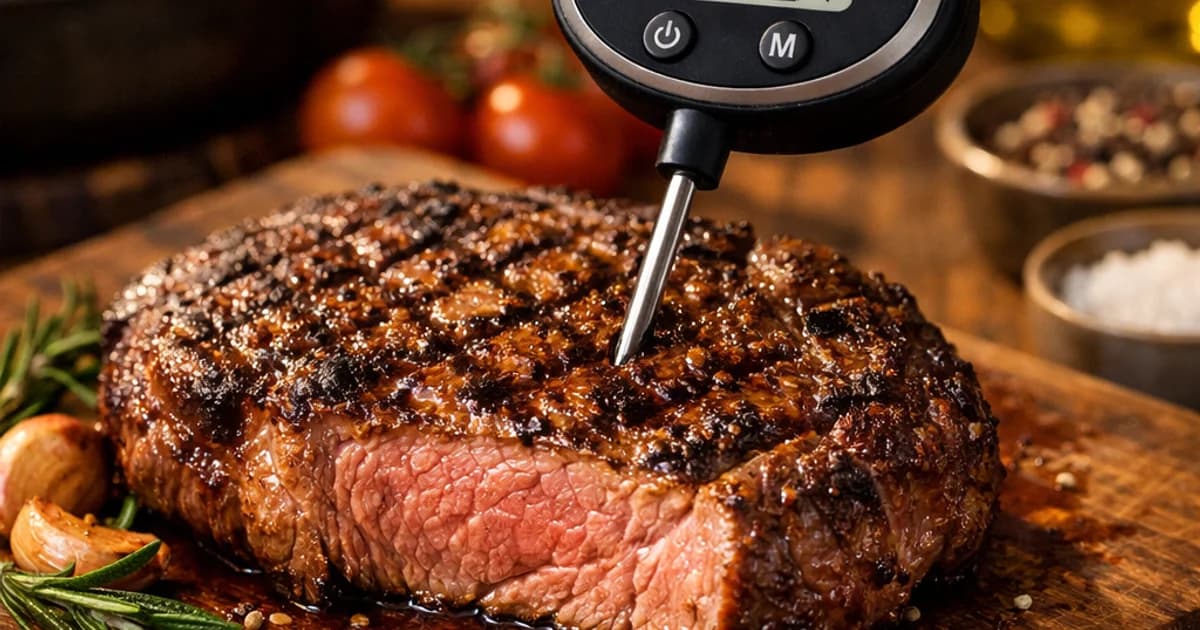
If you are cooking meat and want to make sure you are hitting safe and ideal internal temperatures, the Meat Temperature Chart gives you a comprehensive reference for every cut and cooking method.
Free Tool
Kitchen Unit Converter
Convert between any cooking measurements instantly with our free tool.
Ready to simplify your meal planning?
Join UseMealPlanner and get AI-generated recipes tailored to your preferences, dietary needs, and schedule.
Start Cooking Free