Batch Cooking for Beginners: How to Cook Once and Eat All Week
A complete batch cooking guide for beginners. Learn the 5 best base recipes, a step-by-step Sunday cooking schedule, essential equipment, and how to turn 2-3 hours of cooking into a full week of meals.
Batch cooking is the practice of cooking large quantities of food in a single session and storing it for meals throughout the week. It is not a new concept. Families have been doing it for generations under different names: Sunday cooking, cook-ahead meals, weekly prep. What has changed is the recognition that batch cooking is one of the most effective ways to eat well consistently without spending an hour in the kitchen every night.
The appeal is straightforward. Instead of cooking from scratch seven nights a week — which demands roughly seven hours of combined cooking time — you invest two to three focused hours on one day and reduce weeknight dinner preparation to 10 or 15 minutes of reheating, assembling, or light finishing. The math is not complicated. You spend less total time cooking, you spend less money on food (because planned cooking generates less waste), and you eat better because the food is ready when you are hungry rather than forcing you to choose between a 45-minute cook session and a delivery app.
This guide covers everything a beginner needs to start batch cooking: what equipment you actually need, five foundational base recipes that form the building blocks of dozens of meals, and a detailed Sunday cooking schedule that turns two to three hours into food for the entire week.
What Batch Cooking Is (and What It Is Not)
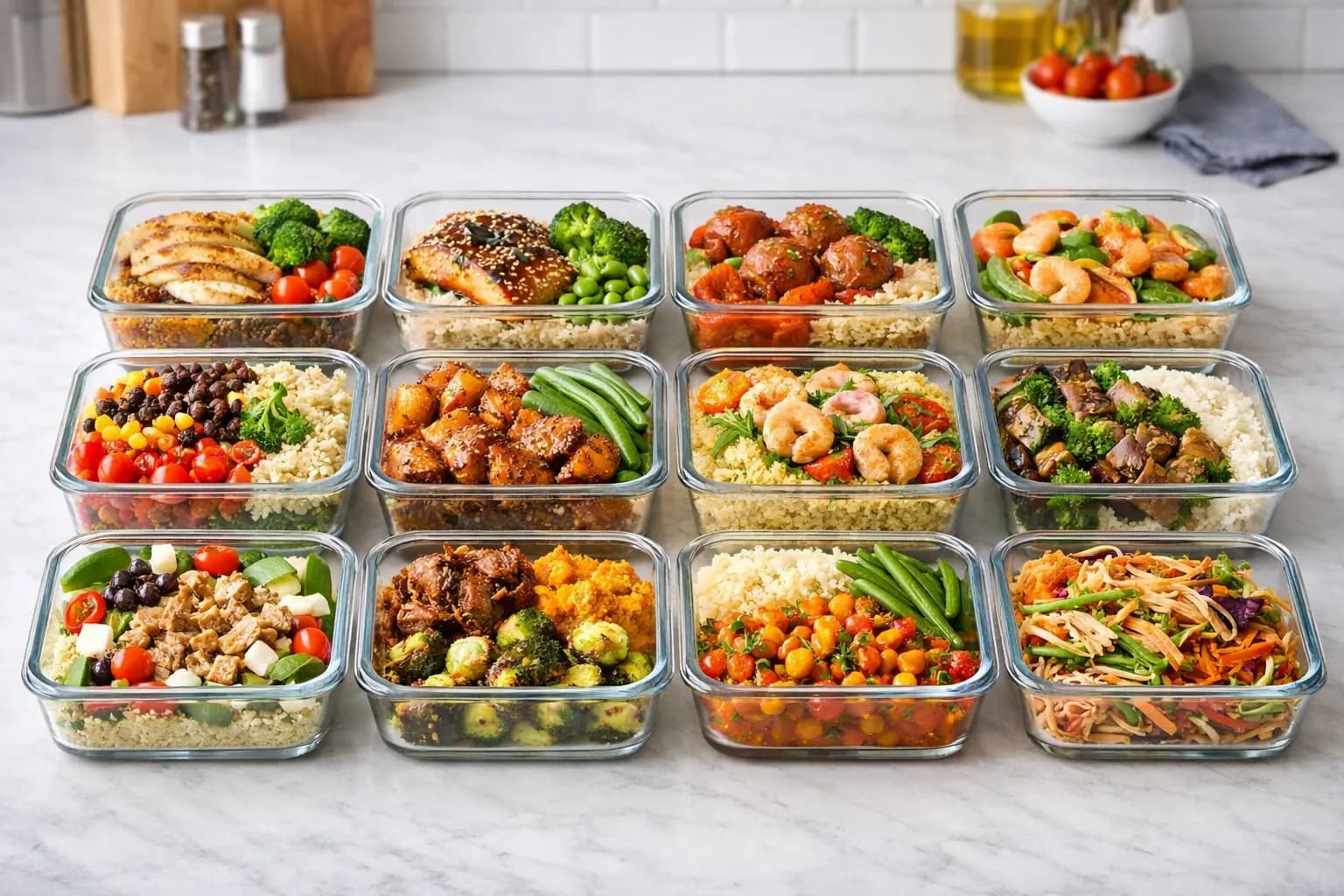
Batch cooking is sometimes confused with meal prep, but they are distinct approaches. Meal prep typically means preparing complete, portioned meals in advance — five identical containers of chicken, rice, and broccoli, for example. Batch cooking is more flexible. You cook large quantities of versatile base components — a pot of grains, several pounds of seasoned protein, a big batch of roasted vegetables, a pot of soup, a multipurpose sauce — and then combine them in different ways throughout the week.
The difference matters because batch cooking avoids the biggest complaint people have about meal prep: eating the same meal five days in a row. With batch cooking, you have a roasted chicken on Sunday that becomes chicken salad on Monday, chicken tacos on Tuesday, and chicken soup on Wednesday. Same protein, three different meals, no repetition.
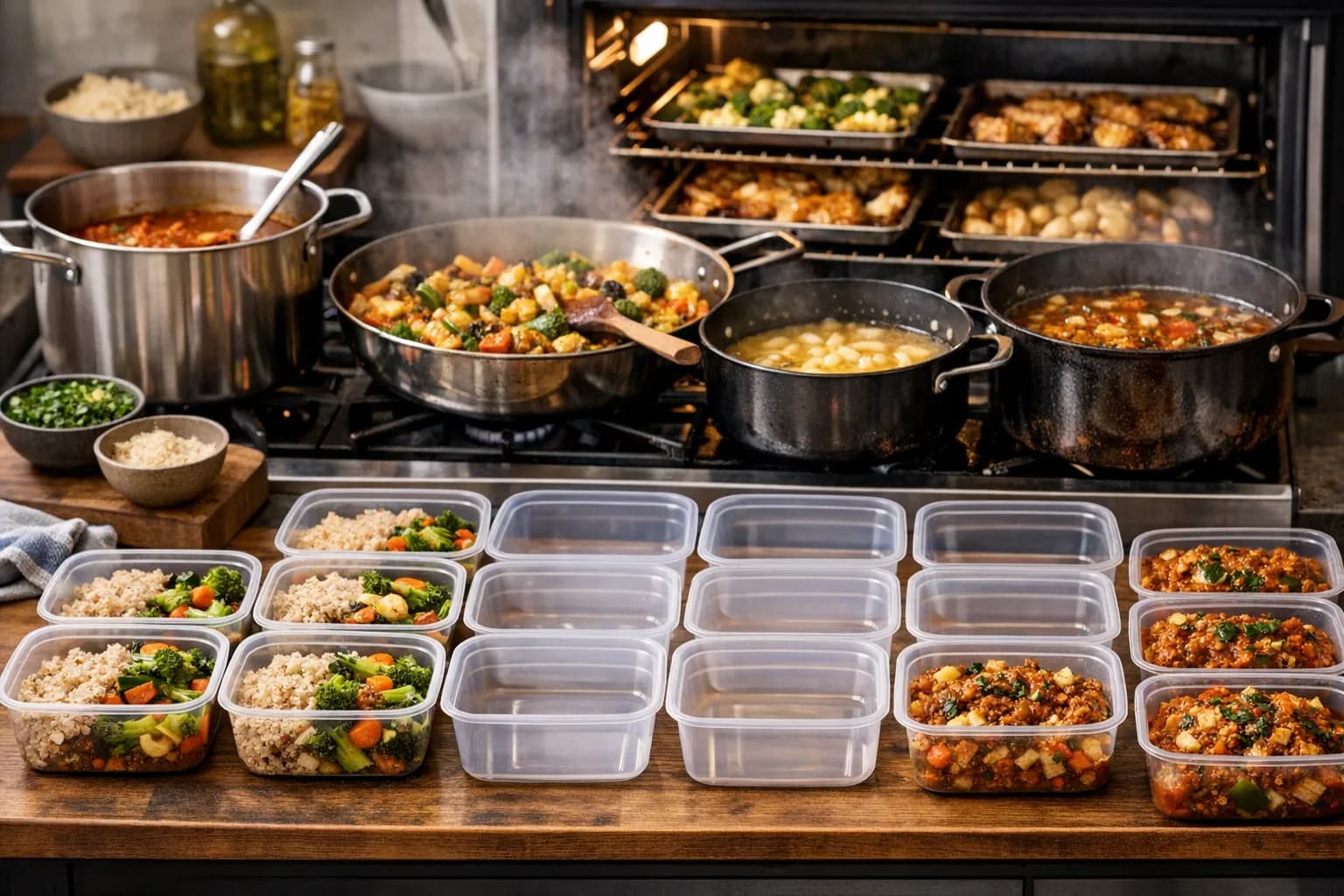
Batch cooking is also not the same as cooking all day. A well-organized batch cooking session takes two to three hours, not six. The efficiency comes from running multiple cooking processes simultaneously: a pot of rice simmers while chicken roasts in the oven while you chop vegetables for a soup that will go on the stove when the chicken comes out.
Ready to simplify your meal planning?
Join UseMealPlanner and get AI-generated recipes tailored to your preferences, dietary needs, and schedule.
Download the AppEssential Equipment for Batch Cooking
You do not need a professional kitchen to batch cook effectively. You need a few key items, most of which you probably already own.
What You Need
- A large stockpot (8 quarts or larger). For cooking grains, making soups, and boiling pasta. The bigger the pot, the more you can produce in a single batch.
- Two sheet pans (half-sheet size, 18 x 13 inches). For roasting vegetables and proteins simultaneously. If you only have one, you can work in batches, but two pans running at the same time doubles your oven output.
- A large skillet or saute pan (12-inch). For browning proteins, making sauces, and cooking anything that benefits from high heat and surface area.
- Glass storage containers with locking lids. In at least three sizes: small (1 cup) for sauces and dressings, medium (2-3 cups) for individual portions, and large (6-8 cups) for soups and big batches. Glass is worth the investment because it does not stain, does not absorb smells, and goes from fridge to microwave to table.
- A sharp chef's knife and a large cutting board. Most of your batch cooking time is spent chopping. A dull knife on a small cutting board makes this work slow and frustrating.
Nice to Have
- A slow cooker or Instant Pot. Either one allows you to start a hands-off protein or soup while you handle other tasks. The slow cooker excels at tough cuts of meat (pork shoulder, beef chuck) that need hours of low heat. The Instant Pot handles the same tasks in a fraction of the time.
- A food processor. Speeds up chopping, shredding, and sauce-making significantly. Not essential, but a meaningful time saver once you are doing larger volumes.
- Parchment paper and aluminum foil. Line your sheet pans to make cleanup trivial. This is a small cost that saves 15 minutes of scrubbing.
- A kitchen scale. Helpful for portioning proteins and grains consistently, especially when you want to adjust recipes to your exact household size. The Cooking Time Converter can also help you adapt timing when scaling recipes up for batch quantities or switching between cooking methods like oven and slow cooker.
The 5 Best Batch Cooking Base Recipes
These five recipes form the foundation of batch cooking. Each one is versatile enough to appear in multiple different meals during the week. Together, they cover all the components you need: grains, proteins, vegetables, soups, and sauces.
Base 1: A Big Pot of Grains
What to make: Cook 3 to 4 cups of dry rice, quinoa, or farro. This yields approximately 9 to 12 cups of cooked grains, enough for 6 to 8 servings.
How to cook it: Rinse grains, combine with water or broth (using broth adds flavor at no extra effort) in your stockpot, bring to a boil, reduce to a simmer, cover, and cook until done. White rice takes 18 minutes. Brown rice takes 40 to 45 minutes. Quinoa takes 15 minutes. Farro takes 25 to 30 minutes.
Storage: Spread cooked grains on a sheet pan to cool quickly (this prevents mushiness), then transfer to containers. Cooked grains keep in the refrigerator for five days and freeze well for up to three months.
What to make with it during the week:
- Stir-fry base (add protein and vegetables, toss with soy sauce)
- Grain bowls (top with roasted vegetables, protein, and a sauce)
- Fried rice (day-old rice actually works better for this)
- Side dish for any protein (reheat with butter and herbs)
- Stuffed peppers (mix with ground meat and cheese, bake)
- Soup addition (add to broth-based soups for body)
Base 2: Versatile Seasoned Protein
What to make: Cook 3 to 4 pounds of protein with simple, neutral seasoning that works across multiple cuisines. The best options for batch cooking are boneless skinless chicken thighs, ground beef or turkey, and pork tenderloin.
How to cook it:
Chicken thighs: Season with salt, pepper, garlic powder, and paprika. Roast on a sheet pan at 425 degrees for 25 to 30 minutes until internal temperature reaches 165 degrees. Let cool, then shred or dice.
Ground beef or turkey: Brown in a large skillet over medium-high heat, breaking into small pieces. Season with salt, pepper, and garlic powder. Drain excess fat. Yield: about 2.5 to 3 pounds of cooked crumbles.
Pork tenderloin: Season with salt, pepper, cumin, and chili powder. Sear all sides in a hot skillet, then roast at 400 degrees for 18 to 22 minutes until internal temperature reaches 145 degrees. Rest for 5 minutes, then slice.
Storage: Cool completely before storing. Cooked chicken and ground meat keep for four days in the fridge. Pork tenderloin keeps for three to four days. All freeze well for two to three months.
What to make with it during the week:
- Tacos, burritos, or quesadillas (any protein)
- Salad topping (shredded chicken, sliced pork)
- Pasta sauce (ground meat with jarred marinara)
- Sandwiches and wraps (sliced pork, shredded chicken)
- Soup ingredient (shredded chicken or ground meat into broth)
- Rice bowls (any protein over batch-cooked grains)
Base 3: A Sheet Pan of Roasted Vegetables
What to make: Roast 2 to 3 pounds of mixed vegetables. The best candidates for batch roasting are broccoli, cauliflower, bell peppers, zucchini, sweet potatoes, Brussels sprouts, carrots, and onions. Choose three to four vegetables per batch.
How to cook it: Cut all vegetables to similar sizes so they cook evenly. Toss with olive oil, salt, pepper, and any dried herbs you like (Italian seasoning, cumin, or smoked paprika all work). Spread in a single layer across two sheet pans — overcrowding causes steaming instead of roasting. Roast at 425 degrees for 20 to 30 minutes, stirring once halfway through, until edges are browned and caramelized.
Storage: Cool completely and store in containers. Roasted vegetables keep for four to five days in the refrigerator. They can be frozen, but the texture softens compared to fresh-roasted.
What to make with it during the week:
- Side dish for any dinner (reheat in oven or microwave)
- Grain bowl topping (over rice or quinoa with sauce)
- Frittata or omelet filling (chop and fold into eggs)
- Wrap or sandwich filling (with protein and cheese)
- Pasta addition (toss with cooked pasta and olive oil)
- Soup ingredient (add to broth for instant vegetable soup)
Base 4: A Big Pot of Soup or Stew
What to make: Cook a large batch (8 to 10 servings) of a hearty soup or stew. The best options for batch cooking are chicken and vegetable soup, beef chili, minestrone, lentil soup, or black bean soup. These all reheat exceptionally well and often taste better after a day or two in the fridge.
How to cook it (example: chicken and vegetable soup): Saute diced onion, carrots, and celery in olive oil until softened (about 5 minutes). Add minced garlic and cook for 1 minute. Add 8 cups of chicken broth, a can of diced tomatoes, and whatever vegetables you have: diced potatoes, green beans, corn, zucchini. Bring to a boil, reduce to a simmer, and cook for 20 minutes until vegetables are tender. Add shredded batch-cooked chicken (from Base 2) and heat through. Season with salt, pepper, and herbs.
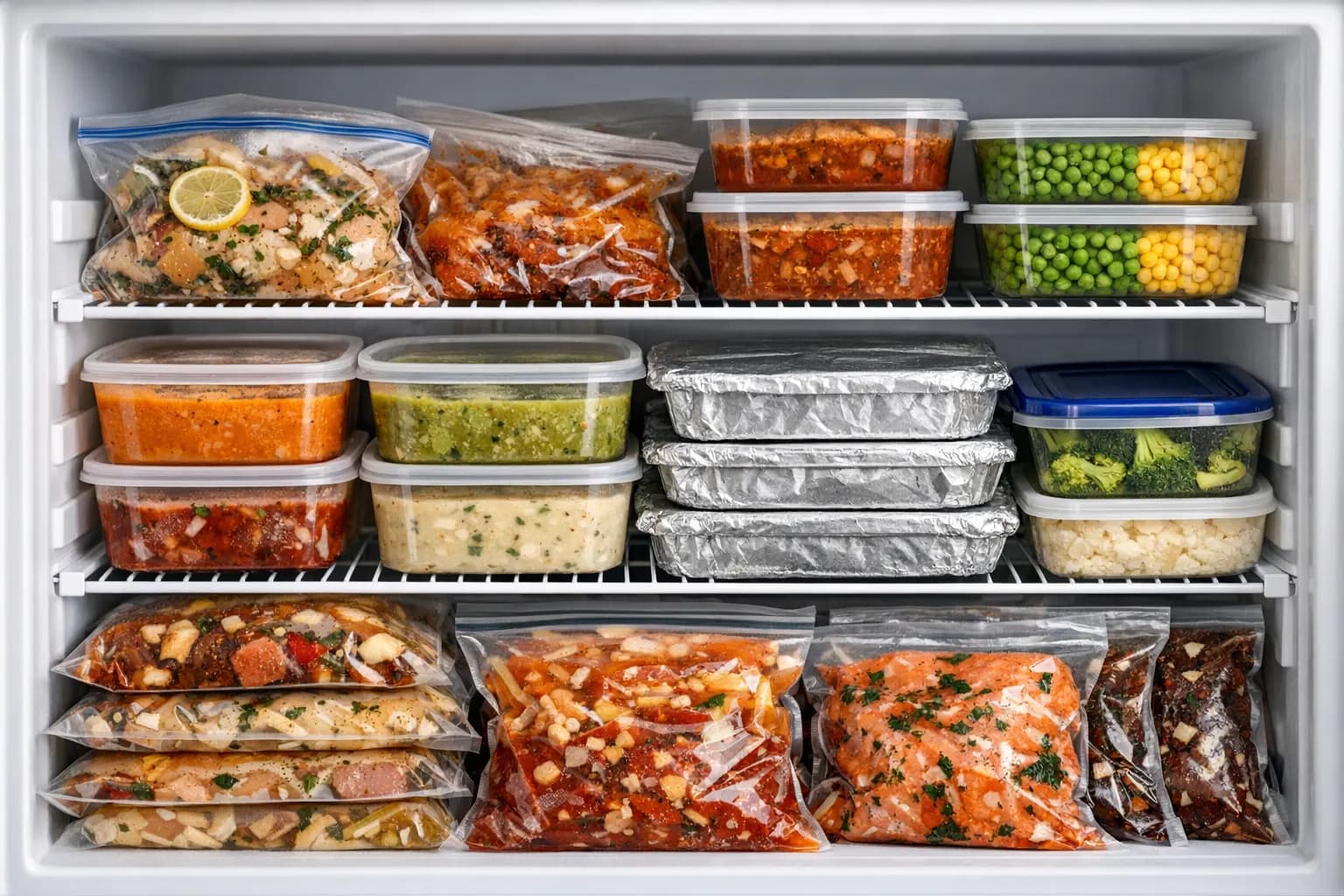
Storage: Cool completely, then portion into containers. Soup keeps for five days in the fridge and freezes beautifully for up to three months. For a deep dive into freezer-based meal strategies, including soups, see The Complete Freezer Meal Prep Guide.
What to make with it during the week:
- Lunch (reheat a single serving)
- Dinner with bread or salad (a complete meal in minutes)
- Base for a new dish (thicken chili and use in burritos, use soup as a sauce over pasta)
Base 5: A Multipurpose Sauce
What to make: Prepare a large batch of a versatile sauce that works across multiple meals. The three most useful batch sauces are: a basic tomato sauce, a stir-fry sauce, or a simple vinaigrette.
How to cook it (example: basic tomato sauce): Saute a diced onion and four cloves of minced garlic in olive oil for 5 minutes. Add two 28-ounce cans of crushed tomatoes, a teaspoon of dried oregano, a teaspoon of dried basil, a pinch of red pepper flakes, salt, and pepper. Simmer uncovered for 30 to 40 minutes until thickened, stirring occasionally. This makes about 6 cups of sauce.
Storage: Cool and store in containers. Tomato sauce keeps for a week in the fridge and freezes for up to four months. Stir-fry sauce (soy sauce, sesame oil, garlic, ginger, honey, cornstarch) keeps for two weeks in a jar in the fridge. Vinaigrette keeps for a week.
What to make with it during the week:
- Pasta sauce (the obvious use)
- Pizza sauce (spread on naan or flatbread, add cheese, bake)
- Shakshuka base (make wells, crack eggs in, bake)
- Braising liquid (simmer meatballs or chicken in it)
- Soup base (thin with broth and add vegetables)
The Sunday Batch Cooking Schedule
Here is a step-by-step schedule that produces all five base recipes in approximately two and a half to three hours. The key to efficiency is running multiple processes simultaneously. While the oven handles the protein and vegetables, the stovetop handles the grains and soup, and you handle the chopping.
Before You Start (5 minutes)
Read through the schedule. Take out all ingredients. Preheat the oven to 425 degrees. Fill your stockpot with water and set it to boil for grains.
Hour 1: Start Everything
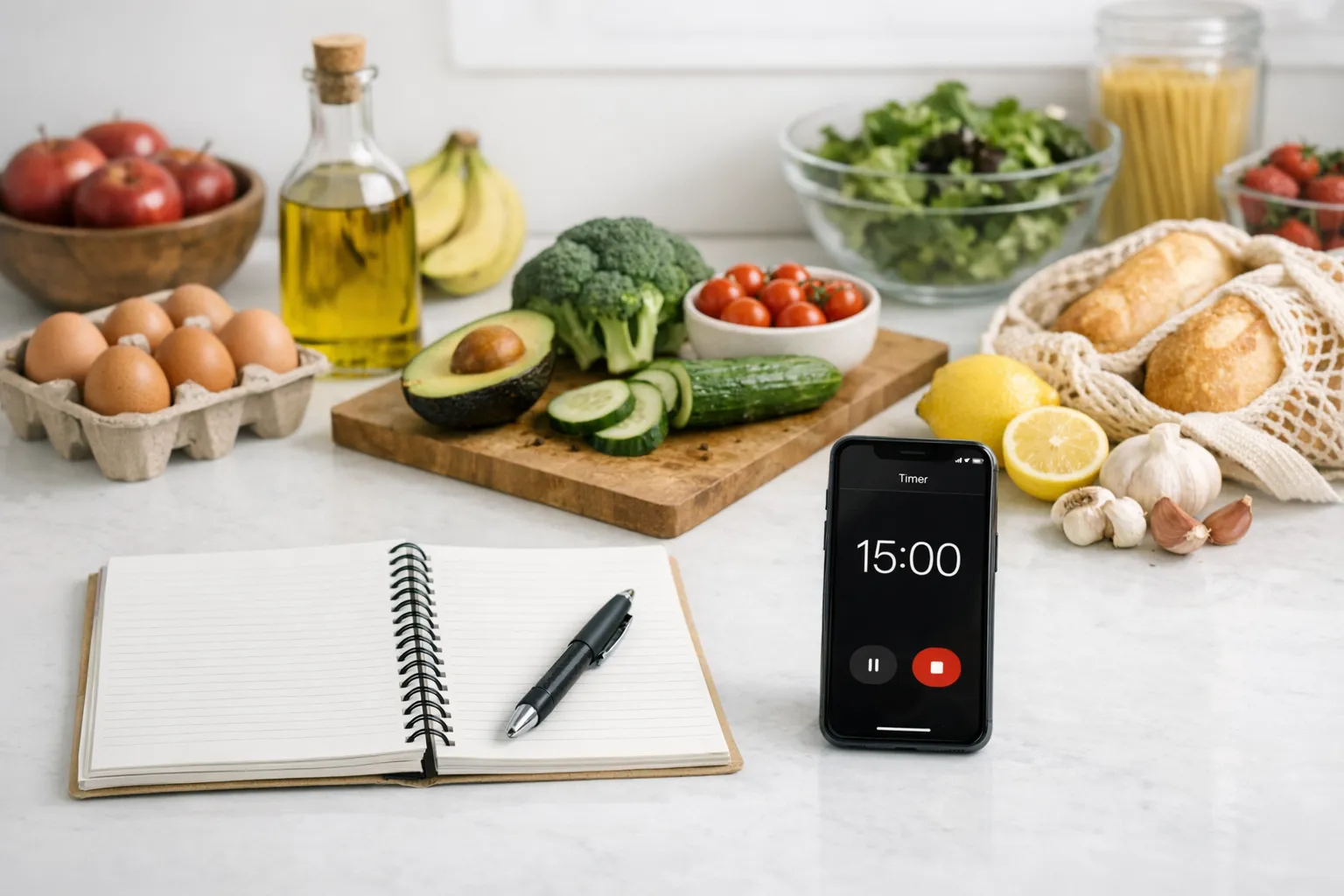
0:00 — Start grains. Add rinsed grains to boiling water or broth. Reduce to simmer, cover, and set a timer. This runs unattended.
0:05 — Prep and start protein. Season chicken thighs (or your chosen protein) and place on a parchment-lined sheet pan. Put in the oven. Set a timer for 25 minutes. While it roasts, move on to vegetable prep.
0:10 — Chop all vegetables. This is the longest single task. Chop everything you need for roasted vegetables, soup, and the sauce. Do it all at once rather than chopping in stages. Group the chopped vegetables by recipe: one bowl for roasting, one for soup, one for sauce. This assembly-line approach is significantly faster than chopping for each recipe individually.
0:30 — Start the sauce. Your onions and garlic are already chopped. Start sauteing them for the tomato sauce. Add canned tomatoes and seasonings. Reduce heat to a simmer. This runs mostly unattended with occasional stirring.
0:35 — Check grains. If done, turn off heat and let sit covered. Fluff with a fork and spread on a sheet pan to cool.
0:40 — Remove protein from oven. Check internal temperature. Let rest on a cutting board. Immediately load the second sheet pan with chopped, oiled, seasoned vegetables and put them in the oven. Set a timer for 25 minutes.
0:45 — Shred or slice protein. While the chicken rests for a few minutes, shred it with two forks or dice it. Transfer to storage containers.
Hour 2: Build the Soup, Monitor Everything
1:00 — Start the soup. Your stockpot is free now that the grains are done. Saute aromatics (onion, carrots, celery), add broth, tomatoes, and vegetables. Bring to a boil, then reduce to a simmer.
1:05 — Stir the sauce. Check consistency. If it is thickening nicely, it should be done in another 15 to 20 minutes.
1:15 — Stir roasted vegetables. Open the oven, give the vegetables a stir or shake, and close. They need about 10 to 15 more minutes.
1:25 — Finish the sauce. Taste and adjust seasoning. Remove from heat. Transfer to storage containers once slightly cooled.
1:30 — Remove roasted vegetables from oven. Transfer to a container or leave on the pan to cool.
1:40 — Add protein to soup. If making chicken soup, add shredded chicken from your batch-cooked protein. Simmer for 5 more minutes. Taste and adjust seasoning.
Hour 3: Cool, Store, Clean
1:50 — Begin cooling and storing. Spread hot foods in shallow containers for faster cooling. Do not put hot food directly into the fridge — it raises the internal temperature and can affect other stored food.
2:00 — Label containers. Mark each container with what is inside and the day you plan to use it. This takes two minutes and prevents the mid-week guessing game.
2:10 — Clean up. Wash pots, pans, sheet pans, and cutting boards. Wipe down counters. Take out food scraps. If you cleaned as you went during the cooking phases, this final cleanup takes 15 to 20 minutes.
2:30 — Done. You now have cooked grains, seasoned protein, roasted vegetables, a pot of soup, and a batch of sauce in your refrigerator. These five components combine into 12 to 15 different meals over the next five days.
Tip
If two and a half hours feels overwhelming for your first session, start with just two bases: grains and protein. These two components alone cover most weeknight dinners when paired with a quick salad or steamed vegetable. Add the other bases in subsequent weeks as the process becomes familiar. For more strategies on integrating batch cooking into a busy schedule, see Easy Meal Prep for Working Parents.
How to Turn Base Recipes Into a Week of Meals
Here is a practical example of how the five base recipes combine into seven dinners and five lunches across a week. None of these meals require more than 15 minutes of finishing work.
Monday Dinner: Chicken grain bowls. Reheat rice and shredded chicken. Top with roasted vegetables and a drizzle of the tomato sauce or a store-bought dressing.
Tuesday Lunch: Leftover soup, reheated. Serve with bread or crackers.
Tuesday Dinner: Pasta with tomato sauce and roasted vegetables. Boil pasta (10 minutes), toss with batch-cooked sauce and vegetables.
Wednesday Lunch: Chicken wrap. Shredded chicken, roasted vegetables, cheese, and a drizzle of dressing in a tortilla.
Wednesday Dinner: Stir-fried rice. Saute day-old rice in a hot skillet with soy sauce, sesame oil, scrambled egg, and any remaining roasted vegetables. Top with shredded chicken or sliced pork. Total cook time: 8 minutes.
Thursday Lunch: Grain salad. Cold cooked grains tossed with chopped raw vegetables, feta cheese, and vinaigrette.
Thursday Dinner: Shakshuka. Reheat tomato sauce in a skillet, make wells, crack eggs in, cover, and cook until eggs are set. Serve with crusty bread. Total cook time: 12 minutes.
Friday Lunch: Remaining soup, reheated.
Friday Dinner: Tacos or burritos. Warm remaining protein in a skillet with cumin and chili powder. Serve in tortillas with whatever toppings you have: cheese, sour cream, salsa, lettuce.
Saturday Lunch: Fried rice with any remaining grains and vegetables.
Saturday Dinner: Pizza night. Spread tomato sauce on store-bought naan or flatbread. Top with shredded chicken, roasted vegetables, and mozzarella. Bake at 400 degrees for 10 minutes.
Twelve meals from five base recipes, with no meal repeating and no evening requiring more than 15 minutes of active cooking.
Scaling Batch Cooking for Your Household
The quantities in this guide are calibrated for a household of two to three people. If you are cooking for a larger family, scale the base recipes proportionally. Four pounds of chicken becomes six. Three cups of dry rice becomes five. Two sheet pans of vegetables becomes three.
The math for scaling is straightforward for most ingredients, but seasonings, cooking times, and liquid ratios do not always scale linearly. When you double a soup recipe, you do not necessarily need double the salt or double the cooking time. The Cooking Time Converter can help you adjust times accurately when increasing batch sizes or switching between cooking methods.
Common Batch Cooking Questions
How Long Does Batch-Cooked Food Last?
As a general rule: cooked grains last five days in the fridge, cooked proteins last three to four days, roasted vegetables last four to five days, soups last five days, and sauces last five to seven days. If you will not use something within these windows, freeze it. Most batch-cooked foods freeze well for two to three months.
Can I Batch Cook If I Have a Small Kitchen?
Yes. A small kitchen actually benefits from batch cooking because you are using the kitchen intensively for one session rather than creating mess and cleanup seven times a week. The key is using your time sequentially rather than trying to run four processes at once. Start with grains. While they cook, prep vegetables. When grains are done, start the protein. Work through the bases one at a time, cleaning each station before starting the next.
Will the Food Get Boring?
Only if you cook the same bases the same way every week. The solution is rotation. One week, cook chicken thighs, rice, and a tomato sauce. The next week, cook ground turkey, quinoa, and a stir-fry sauce. The third week, cook pork tenderloin, farro, and a lentil soup. Build a library of base recipes that you rotate through, and the meals they produce will feel varied even though the method stays the same.
How Do I Get Started If I Have Never Batch Cooked?
Start this Sunday with just two items: a pot of rice and a batch of seasoned, shredded chicken. Total time: about one hour. Use them throughout the week in whatever way feels natural — rice bowls, chicken wraps, stir-fry, soup. Once you see how much weeknight time this saves, you will naturally want to add a third base, then a fourth. Let the habit grow organically rather than trying to execute the full five-base plan on day one.
For more guidance on building a sustainable meal prep habit from scratch, see Easy Meal Prep for Working Parents, which covers a complementary approach focused on complete make-ahead meals rather than individual components.
Key Takeaway
Batch cooking transforms two to three hours of focused Sunday cooking into a full week of meals by producing five versatile base components: cooked grains, seasoned protein, roasted vegetables, a big pot of soup, and a multipurpose sauce. These bases combine in different ways to create 12 to 15 distinct meals with no more than 15 minutes of finishing work on any given night. Start with just two bases (grains and protein) if the full process feels overwhelming, and expand your repertoire as the habit takes hold. The total time spent cooking across the week drops from roughly seven hours to three, while the quality and variety of your meals improves because every component was cooked with intention rather than assembled under weeknight pressure.
Ready to simplify your meal planning?
Join UseMealPlanner and get AI-generated recipes tailored to your preferences, dietary needs, and schedule.
Download the App