Easy Meal Prep for Working Parents: A Sunday Strategy That Actually Works
A realistic Sunday meal prep system for working parents. Five make-ahead meals, practical time-saving tips, and a strategy that survives hectic weeknights.
It is 5:47 PM. You just walked through the door after picking up the kids from practice. Everyone is hungry. The fridge has ingredients, technically, but nothing that assembles into a meal in the next twenty minutes. So you order takeout again, feel vaguely guilty about it, and tell yourself you will figure out a better system next week.
If this sounds familiar, you are not alone and you are not failing. You are just operating without a system. The problem is not a lack of cooking skill or willpower. The problem is that weeknight dinner requires decision-making and active cooking time at the exact moment when you have the least of both.
Meal prep solves this by front-loading the work to a time when you actually have capacity: the weekend. But the traditional meal prep advice, where you spend four hours on Sunday cooking a dozen meals, is not realistic for most working parents. You need the weekend too. You have soccer games, errands, laundry, and maybe an hour or two of downtime that you would prefer not to spend over a hot stove.
This guide presents a streamlined Sunday meal prep strategy that takes about 90 minutes and sets you up for five weeknight dinners with minimal day-of cooking. It is designed for working parents specifically, which means every recommendation accounts for the fact that your time, energy, and patience are limited resources.
Ready to simplify your meal planning?
Join UseMealPlanner and get AI-generated recipes tailored to your preferences, dietary needs, and schedule.
Download the AppThe Sunday Meal Prep Strategy
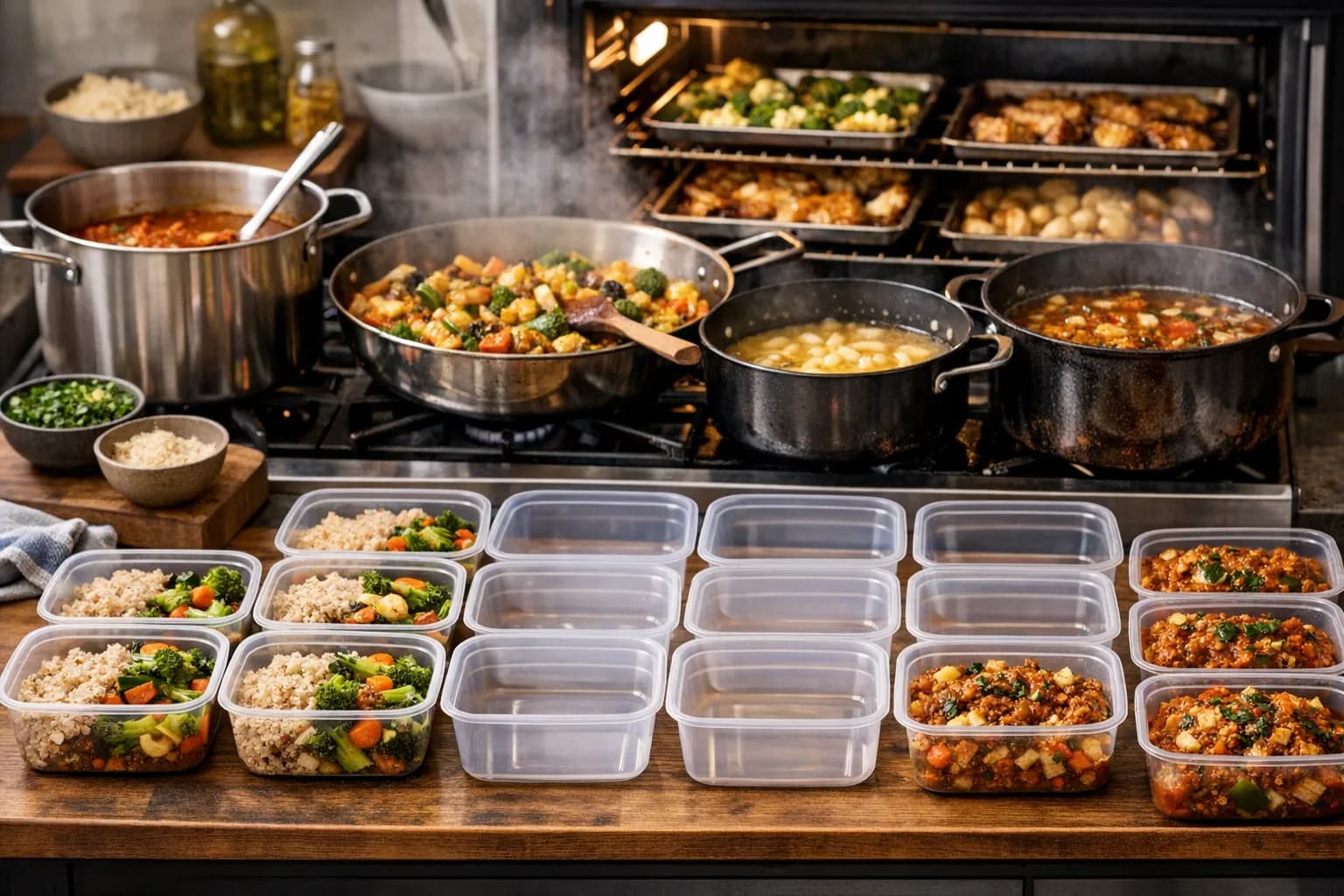
The core idea is simple: spend 90 minutes on Sunday doing the prep work that would otherwise eat into your weeknights. You are not cooking five complete meals. You are preparing components and doing the tedious work (chopping, marinating, cooking grains, assembling casseroles) so that Monday through Friday, you are reheating, assembling, or doing a quick 15-minute cook rather than starting from scratch.
Here is how the 90 minutes break down:
Minutes 1 through 15: Grains and Liquids
Start two things that run on autopilot while you prep everything else:
- A large pot of rice or quinoa. Cook double what you think you need. Cooked grains keep for five days in the fridge and form the base of at least three dinners: stir-fry, grain bowls, and a side dish.
- A slow cooker or Instant Pot meal. If you are making the pulled chicken or a soup (both in the recipes below), get it going now. It will cook itself while you handle everything else.
Minutes 15 through 45: Protein and Vegetables
This is the most active phase. You are doing three things:
-
Season and prep proteins. Marinate chicken thighs for one meal. Season ground beef or turkey for another. If you are making meatballs, roll them now and lay them on a sheet pan.
-
Chop all vegetables for the week. This is the single highest-value prep task. Dicing onions, slicing bell peppers, chopping broccoli, and mincing garlic on Sunday means you never have to do it at 6 PM on a Tuesday. Store everything in labeled containers or bags.
-
Prep one sheet pan meal. Arrange a full sheet pan dinner (protein plus vegetables) on a lined baking sheet, cover it with foil, and store it in the fridge. On the night you want it, the sheet pan goes straight into the oven. Total weeknight effort: turning on the oven and setting a timer.
Minutes 45 through 75: Assembly and Cooking
Now you bring it together:
- Cook any make-ahead meals that need stovetop or oven time. A baked pasta, a casserole, or a big batch of soup. These get portioned into containers and stored.
- Assemble anything that benefits from sitting. Overnight marinades, a chili that will taste better after a day in the fridge, a pasta bake that is ready to go into the oven.
- Pack lunches if applicable. While you have everything out, building five days of lunches takes an extra ten minutes and saves you from making decisions every morning.
Minutes 75 through 90: Storage and Cleanup
Label everything with the day you plan to eat it. This sounds trivial but it prevents the "what is this?" moment on Wednesday when you cannot remember what you prepped. Clean up as you go during the cooking phases, so this final stage is just putting containers in the fridge and wiping counters.
Tip
If 90 minutes feels like too much on a Sunday, split the work. Do your chopping and marinating on Saturday night after the kids are in bed (20 minutes), and do the cooking portion on Sunday morning (45 minutes). The result is the same, but it feels lighter because no single session demands a full 90 minutes of your attention.
Five Make-Ahead Meals That Last the Week
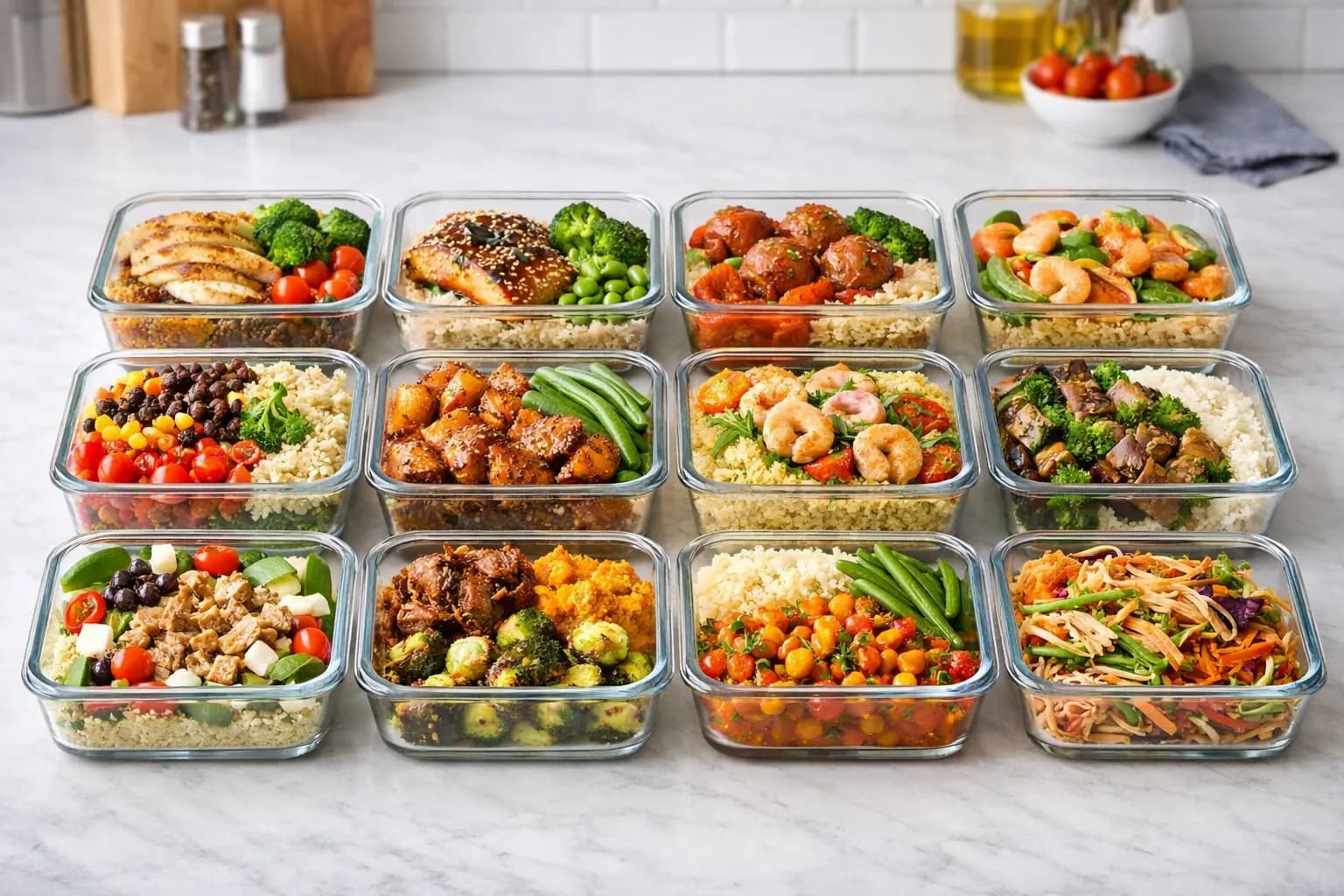
These five meals are chosen for three qualities: they taste good reheated (or require minimal day-of cooking), they appeal to both adults and kids, and they are built from overlapping ingredients so your grocery list stays short.
1. Sheet Pan Chicken Fajitas (Monday)
Prep on Sunday: Slice 1.5 pounds of chicken breast into strips. Toss with olive oil, chili powder, cumin, garlic powder, salt, and a squeeze of lime. Slice three bell peppers and one large onion. Arrange everything on a parchment-lined sheet pan, cover with foil, and refrigerate.
Monday evening: Remove foil, bake at 400 degrees for 20 to 25 minutes. Warm corn tortillas. Set out toppings: shredded cheese, sour cream, salsa, avocado. Total active time: 5 minutes.
Why it works for families: Fajitas are inherently customizable. Everyone builds their own, which sidesteps picky-eater conflicts. Kids who will not eat peppers just load up on chicken and cheese.
2. Slow Cooker Pulled Chicken (Tuesday)
Prep on Sunday: Place 2 pounds of boneless, skinless chicken thighs in the slow cooker with a jar of salsa, a teaspoon of cumin, and salt. Cook on low for 6 to 8 hours (start it Sunday morning or use a programmable timer for Tuesday). Shred with two forks when done.
Tuesday evening: Serve over rice (already cooked from Sunday prep) with black beans, shredded cheese, and whatever toppings you like. Alternatively, use it in quesadillas, tacos, or burrito bowls. Total active time: 5 minutes to reheat and assemble.
Why it works for families: Pulled chicken is a neutral protein that adapts to everyone's preferences. One child wants a quesadilla, another wants a bowl with rice, and you want a salad with chicken on top: all the same protein, three different meals.
3. Baked Pasta with Meat Sauce (Wednesday)
Prep on Sunday: Brown 1 pound of ground beef or turkey. Add a jar of marinara sauce, a pinch of red pepper flakes, and Italian seasoning. Cook 1 pound of penne or rigatoni until just barely al dente (it will finish cooking in the oven). Combine pasta and sauce in a baking dish, top with shredded mozzarella, cover tightly with foil, and refrigerate.
Wednesday evening: Bake covered at 375 degrees for 25 minutes, then uncover for 10 minutes to brown the cheese. Make a simple green salad while it bakes. Total active time: 5 minutes to put it in the oven and toss the salad.
Why it works for families: Baked pasta is one of the most universally accepted family meals in existence. It reheats beautifully, the sauce improves after a day in the fridge, and leftovers make excellent school lunches.
4. Teriyaki Stir-Fry with Rice (Thursday)
Prep on Sunday: Make a batch of teriyaki sauce: 1/4 cup soy sauce, 2 tablespoons honey, 1 tablespoon rice vinegar, 1 teaspoon sesame oil, 1 teaspoon cornstarch dissolved in 1 tablespoon water. Store in a jar. Slice 1 pound of flank steak or chicken breast and store separately. Your vegetables are already chopped from the mass prep session.
Thursday evening: Heat a large skillet or wok over high heat. Cook the protein for 3 to 4 minutes. Add vegetables and cook for 3 to 4 minutes more. Pour in the teriyaki sauce and stir until it thickens, about 1 minute. Serve over the prepped rice, reheated in the microwave. Total active time: 12 to 15 minutes.
Why it works for families: Stir-fry is fast, flexible, and familiar. It uses up whatever vegetables you have. Kids who are hesitant about mixed dishes often respond well to stir-fry because they can see and identify every component.
5. Soup or Chili with Bread (Friday)
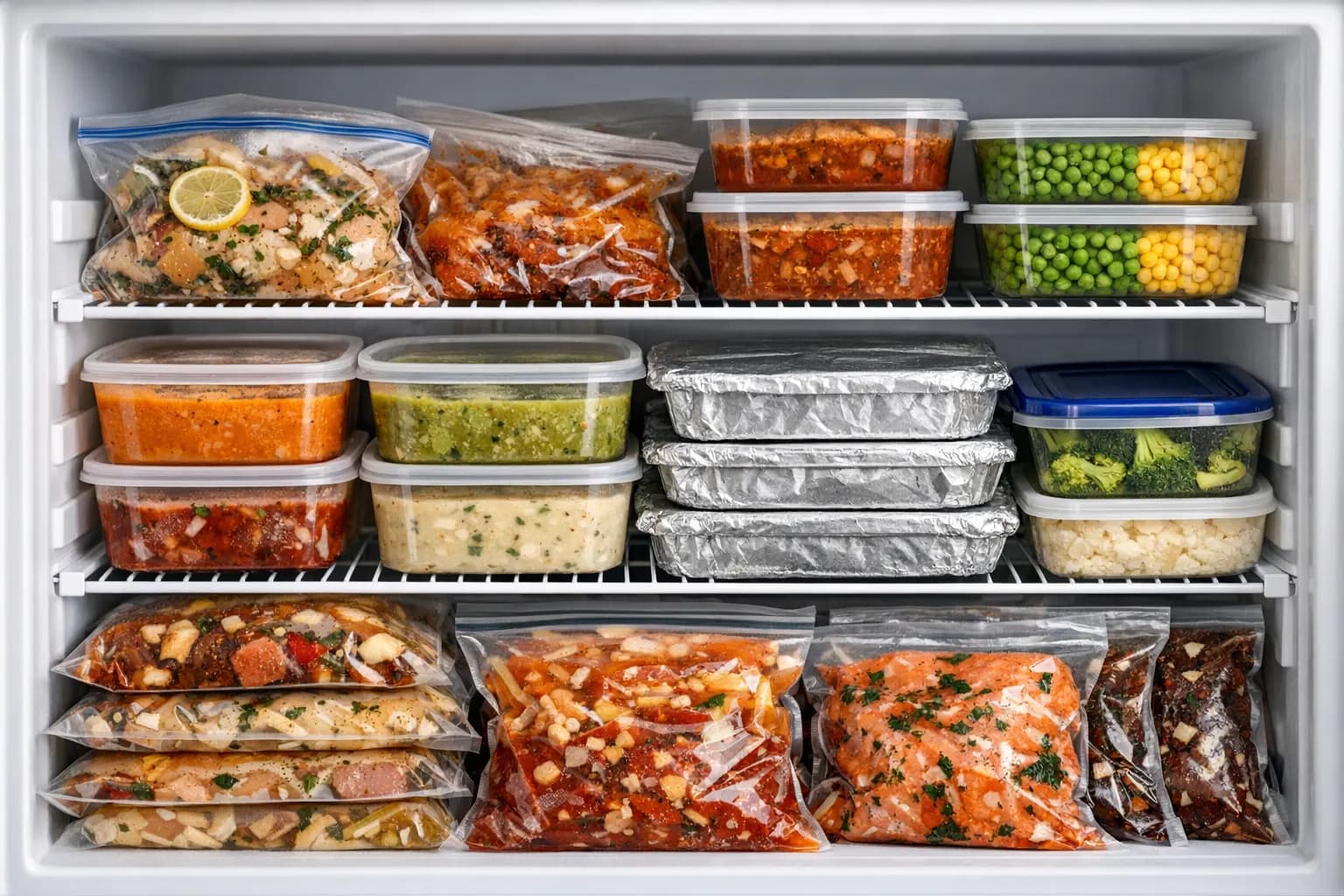
Prep on Sunday: Make a large pot of soup or chili. Good options include chicken tortilla soup, classic beef chili, minestrone, or a simple chicken and vegetable soup. Allow it to cool, then portion into containers and refrigerate (or freeze half for the following week).
Friday evening: Reheat soup on the stove or in the microwave. Serve with crusty bread, GF cornbread, or crackers. Total active time: 10 minutes to reheat and set the table.
Why it works for families: Friday night should feel easy. Soup is comfort food, it reheats perfectly, and serving it with bread makes it feel like a complete meal despite requiring almost no effort. Plus, a big batch of chili or soup on Friday means weekend lunches are covered too.
Your Weekly Grocery List
Because these five meals share ingredients, the grocery list is shorter than you might expect:
Proteins: 1.5 lbs chicken breast, 2 lbs chicken thighs, 1 lb ground beef or turkey, 1 lb flank steak or additional chicken
Produce: 3 bell peppers, 2 large onions, 1 head broccoli, 1 head garlic, 2 limes, 1 avocado, salad greens, tomatoes for salad, vegetables for soup (carrots, celery, potatoes)
Pantry: Rice or quinoa, 1 lb pasta, soy sauce, honey, rice vinegar, sesame oil, cornstarch, chili powder, cumin, garlic powder, Italian seasoning, olive oil, marinara sauce (1 jar), salsa (1 jar), canned beans, canned tomatoes (for soup/chili), chicken broth
Dairy: Shredded mozzarella, shredded cheddar or Mexican blend, sour cream
Bread: Corn tortillas, bread or rolls for soup night
If you need to adjust quantities for a larger family, the Recipe Scaler can help you multiply ingredient amounts accurately without guesswork.
Time-Saving Tips for Weeknight Dinners
Beyond the Sunday prep session, these habits compound over time and reduce weeknight friction significantly.
Cook Once, Eat Twice
This is the most powerful principle in meal prep for parents. Every time you cook a protein, cook double. Sunday's marinated chicken becomes Monday's fajitas and Tuesday's pulled chicken filling. Wednesday's meat sauce makes enough for pasta plus a container of sauce you freeze for a future week.
This is not about eating the same meal twice. It is about cooking a component once and using it in two different contexts. Pulled chicken becomes a quesadilla on one night and a salad topping on another. A batch of seasoned ground beef becomes pasta sauce on Wednesday and taco filling the following week.
Invest in the Right Containers
Cheap containers with ill-fitting lids will undermine your entire system. Leaking containers create messes, lose food to spoilage, and make the fridge look chaotic, which makes you less likely to use what you prepped.
Buy a set of glass containers with locking lids in three or four sizes. Glass does not stain, does not retain smells, and goes from fridge to microwave to table without needing a separate dish. The upfront cost pays for itself within weeks in reduced food waste.
Use the Oven More Than the Stovetop
Stovetop cooking demands your attention. Oven cooking does not. A sheet pan dinner goes in the oven and cooks itself for 25 minutes while you help with homework, sort the mail, or sit down for five minutes. A casserole bakes while you set the table. The oven is the working parent's best friend because it gives you back time during the cooking window.
Keep a "Panic Meal" Stocked
Despite the best-laid plans, some nights go sideways. Keep the ingredients for one ultra-simple meal permanently stocked: eggs and cheese for omelets, canned soup, frozen pizza, or pasta with butter and parmesan. This is not a failure. It is a safety net that prevents expensive and unhealthy impulse orders.
Embrace Breakfast for Dinner
Eggs, pancakes, and French toast take 15 minutes, kids love them, and they require ingredients you almost always have on hand. Breakfast for dinner once every two weeks is a legitimate strategy, not a sign that meal planning has failed.
Prep While You Wait
If you are already in the kitchen reheating a prepped meal, use the five to ten minutes of waiting time to do one small prep task for the next day: marinate tomorrow's protein, chop an onion, or pack lunches. These micro-sessions of prep add up across a week and keep the system running without requiring dedicated prep time beyond Sunday.
Making the System Sustainable
The meal prep systems that survive long-term share one characteristic: they are flexible enough to absorb disruption without collapsing. Here is how to build that resilience.
Rotate, Do Not Reinvent
You do not need five new meals every week. Most families are perfectly happy rotating through 10 to 15 dinners. Spend the first month building up your repertoire, then rotate. Planning becomes almost effortless because you are choosing from a list of known winners rather than searching for new recipes every week.
Accept Imperfect Weeks
Some Sundays you will not prep. Life happens. When it does, fall back on the simplest options: rotisserie chicken from the grocery store, pasta with jarred sauce, or omelets. One unprepped week does not mean the system is broken. Just pick it back up the following Sunday.
Let AI Do the Recipe Thinking
The hardest part of meal planning is not the cooking or the prepping. It is deciding what to make. An AI meal planner eliminates this bottleneck entirely. Set your preferences, your family size, and your time constraints, and let it generate a week of meals with a grocery list. You keep the agency of cooking and feeding your family, but you offload the cognitive load of recipe selection.
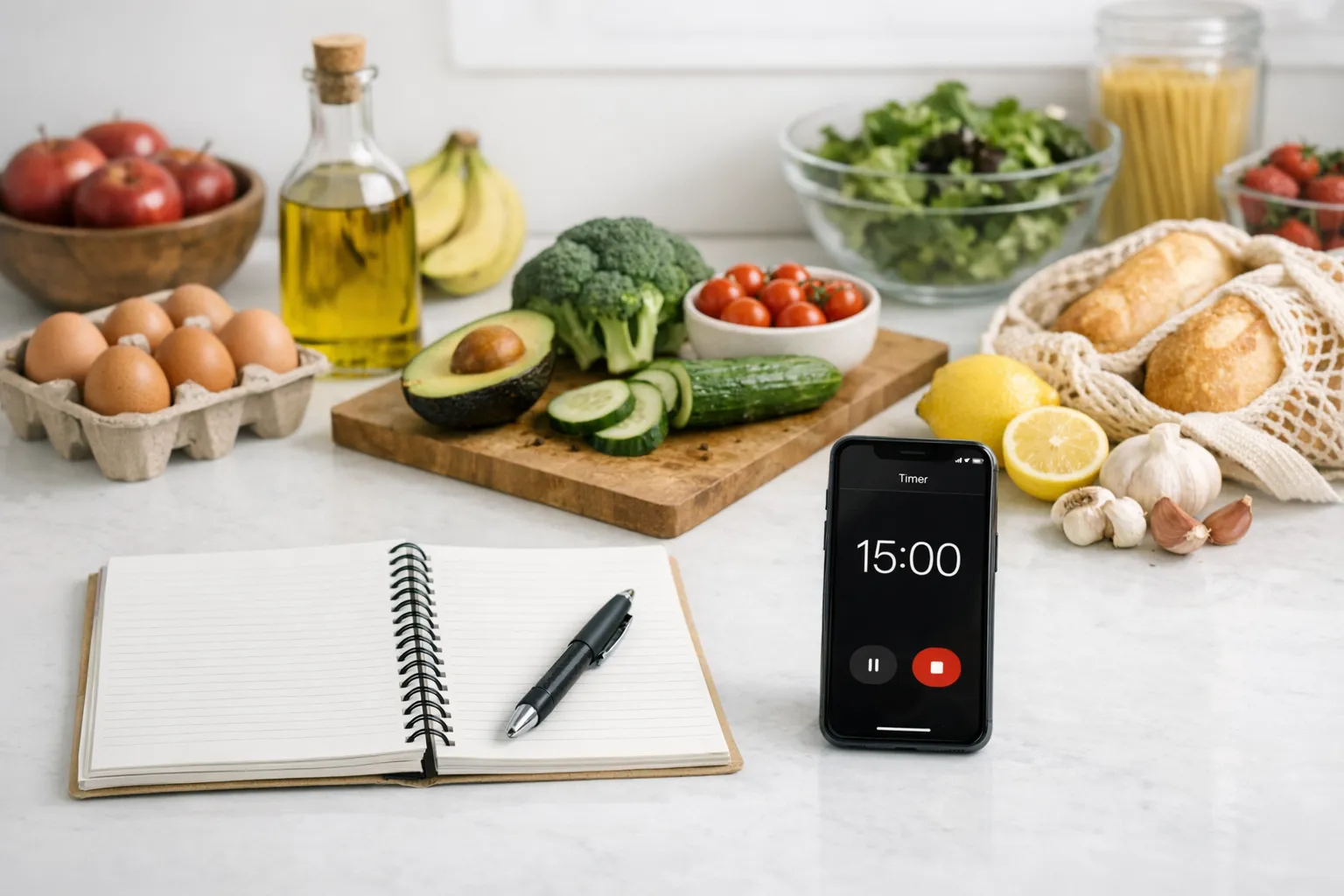
For a deeper look at how to plan an entire week in just 15 minutes, see How to Meal Plan When You Have No Time. The 15-minute method pairs well with this Sunday prep strategy: use it to plan, then use this guide to prep.
Get the Family Involved
Kids old enough to use a butter knife can wash vegetables, tear lettuce, measure rice, or stir sauces. Involving children in meal prep is slower in the short term but pays off enormously in the long term. They learn to cook, they are more invested in eating what they helped prepare, and the prep time becomes family time rather than a solo chore.
Adjusting Cooking Times Across Methods
One common challenge for working parents is adapting recipes to fit available time. A recipe that calls for 45 minutes in the oven can be done in 15 minutes in an Instant Pot. A stovetop stew that takes 30 minutes becomes a slow cooker meal that runs while you are at work (6 to 8 hours on low). An oven recipe converts to the air fryer by reducing temperature by 25 degrees and time by about 20 percent.
For precise conversions between cooking methods, the Cooking Time Converter can calculate exact times and temperatures for any recipe, which is especially useful when adapting a recipe to fit the time you actually have on a given weeknight.
Key Takeaway
Effective meal prep for working parents is not about spending an entire Sunday in the kitchen. It is about a focused 90-minute session that handles the tedious work (chopping, marinating, cooking grains, assembling make-ahead meals) so weeknight dinners require 5 to 15 minutes of active effort. Build five meals around shared ingredients, cook double whenever possible, use the oven instead of the stovetop, and keep a panic meal stocked for nights when plans fall apart. The system works because it is designed to be imperfect and still functional.
Ready to simplify your meal planning?
Join UseMealPlanner and get AI-generated recipes tailored to your preferences, dietary needs, and schedule.
Download the App