How to Meal Plan When You Have No Time: The 15-Minute Method
A practical 15-minute weekly meal planning system broken into three 5-minute steps. Stop winging dinner every night without spending hours on planning.
Most meal planning advice assumes you have a free Sunday afternoon to browse cookbooks, build elaborate spreadsheets, and prep seventeen containers of food. That is not the reality for most people. Between work, kids, errands, and the general chaos of life, dedicated planning time is a luxury you probably do not have.
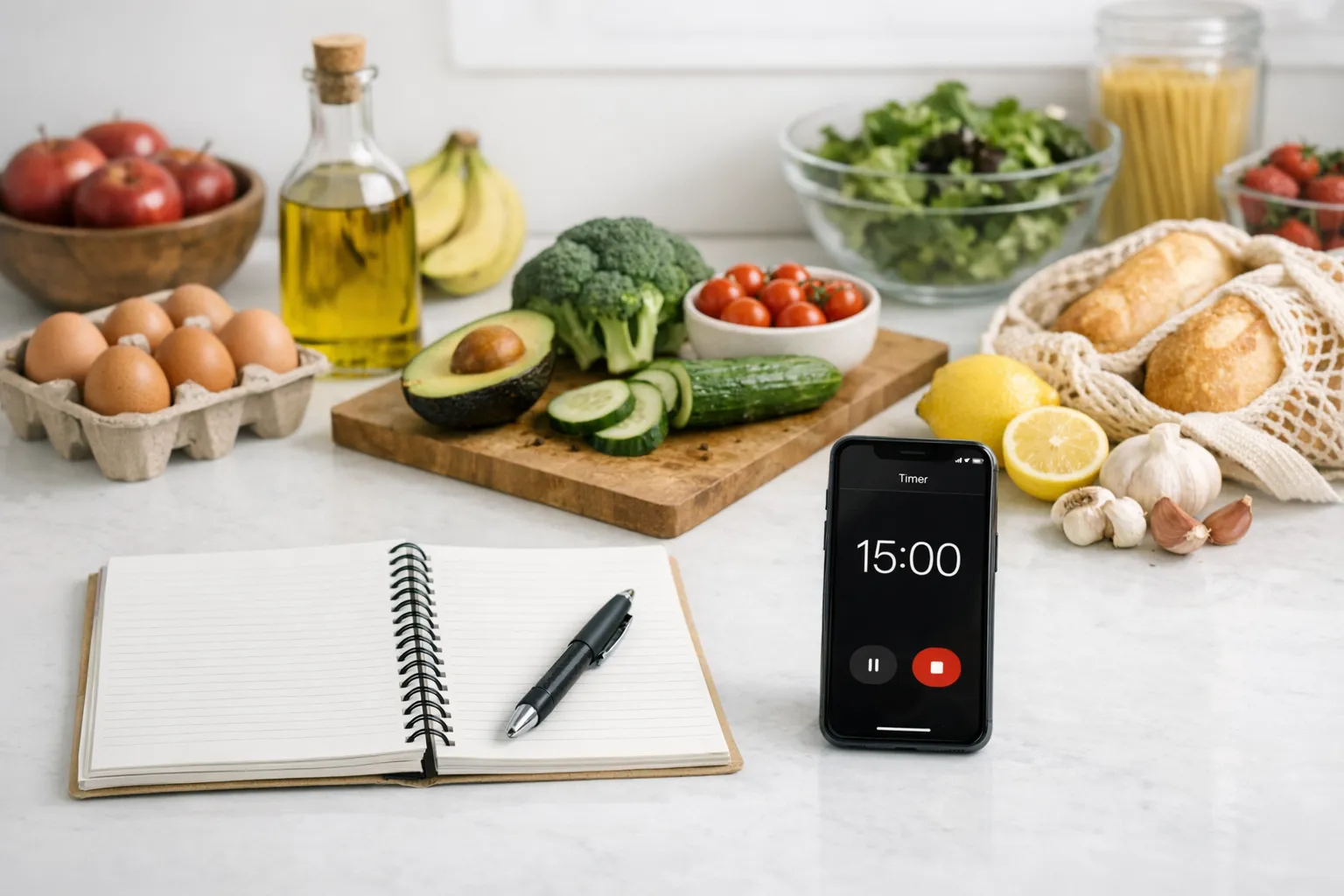
Here is the thing: you do not need an hour. You need fifteen minutes. That is enough time to build a practical meal plan for the entire week, generate a grocery list, and set yourself up to eat well without the nightly panic of "what are we having for dinner?"
This method works because it is designed around the way busy people actually operate. No perfectionism, no elaborate meal prep sessions, no complicated recipes that require a culinary degree. Just a simple system you can run through once a week while drinking your morning coffee.
Why Most Meal Planning Systems Fail
Before getting into the method, it helps to understand why the typical approach does not stick. The biggest reason is overcomplication. People try to plan every meal for every person, find new recipes for each one, and create a system that looks like a project management tool. That works for about two weeks before it falls apart.
The second reason is time. Conventional meal planning advice tells you to spend 30 to 60 minutes per week planning, plus several hours batch cooking. For someone already stretched thin, that is simply not going to happen. And when the system requires more effort than the problem it solves, people abandon it.
The third reason is rigidity. Plans that lock you into specific meals on specific days do not survive contact with real life. The meeting runs late, the kids suddenly want to go to their friend's house, you forgot to thaw the chicken. A good meal plan needs flexibility built into it.
Ready to simplify your meal planning?
Join UseMealPlanner and get AI-generated recipes tailored to your preferences, dietary needs, and schedule.
Download the AppThe 15-Minute Method: Three Steps, Five Minutes Each
This system breaks weekly meal planning into three distinct phases. Each one takes five minutes. You can do all three back to back, or spread them across a single morning. The key is that no individual step feels overwhelming.
Step 1: The 5-Minute Review (Minutes 1 through 5)
Open your fridge, freezer, and pantry. You are not cleaning or organizing. You are answering three questions:
What needs to be used up this week? Look for produce that is aging, leftovers that need to be eaten, proteins approaching their use-by date, and anything in the freezer that has been there too long. These items become the foundation of your plan because they are free food you have already paid for.
What staples are running low? Check your essentials: cooking oil, rice or pasta, eggs, bread, butter, onions, garlic. If any of these are getting low, they go on the list immediately. You do not want to discover you are out of olive oil halfway through cooking dinner on Wednesday.
What is the schedule this week? Think through each evening. Are there nights when you will be home late? Nights when someone has an activity? A night when you are hosting? This is not about memorizing the calendar; it is about flagging the two or three nights that will be different from normal. Those nights get the easiest meals.
Write down what you find. A notes app on your phone works fine. You are building a quick inventory and a rough sense of the week ahead.
Step 2: The 5-Minute Plan (Minutes 5 through 10)
Now you fill in the week. You are not planning breakfast and lunch unless those are problem areas for you. Most people can handle breakfast on autopilot and lunch follows a pattern. Focus on dinner, because dinner is where most people get stuck.
Here is the framework:
- 2 anchor meals: Recipes you already know well and can cook without looking anything up. These go on your busiest nights. Think stir-fry with whatever vegetables you have, pasta with a simple sauce, or sheet pan chicken with roasted vegetables.
- 2 new or semi-new meals: Recipes that are slightly more interesting but still straightforward. This is where you use up the ingredients from your fridge review. If you have bell peppers and ground turkey that need to be used, that is stuffed peppers or a taco night.
- 1 leftover night: Plan to eat leftovers from one of the bigger meals earlier in the week. This is a free night with zero cooking.
- 1 easy night: Eggs and toast, sandwiches, a grain bowl with whatever is in the fridge, or takeout. Give yourself permission to keep it simple.
- 1 flex night: Leave one night unplanned. This is your buffer for schedule changes, spontaneous dinner with friends, or the night you just do not feel like cooking.
This structure is forgiving. You are only actually cooking four or five meals, and two of those are things you could make in your sleep.
If you want recipe suggestions based on the ingredients you already have, an AI meal planner like UseMealPlanner can generate a full week of recipes tailored to your preferences in under a minute. That turns this five-minute step into a two-minute step.
Step 3: The 5-Minute List (Minutes 10 through 15)
With your plan sketched out, build your grocery list. Go meal by meal and write down anything you do not already have. Cross-reference with your pantry review from Step 1 so you do not buy duplicates.
Organize the list by store section if your store layout is predictable: produce, dairy, meat, pantry, frozen. This is not about being obsessively organized; it is about cutting your shopping time in half by not backtracking through aisles.
If a recipe calls for an unusual ingredient you will only use once, check whether you can substitute something you already own. The Ingredient Substitution Finder can help you identify swaps that keep the dish on track without adding extra items to your cart.
Tip
Keep a running grocery list on your phone throughout the week. When you use the last of something, add it immediately. By the time you sit down for your 15-minute planning session, half your list is already written.
Making It Even Faster: Batch Prep Without the Marathon
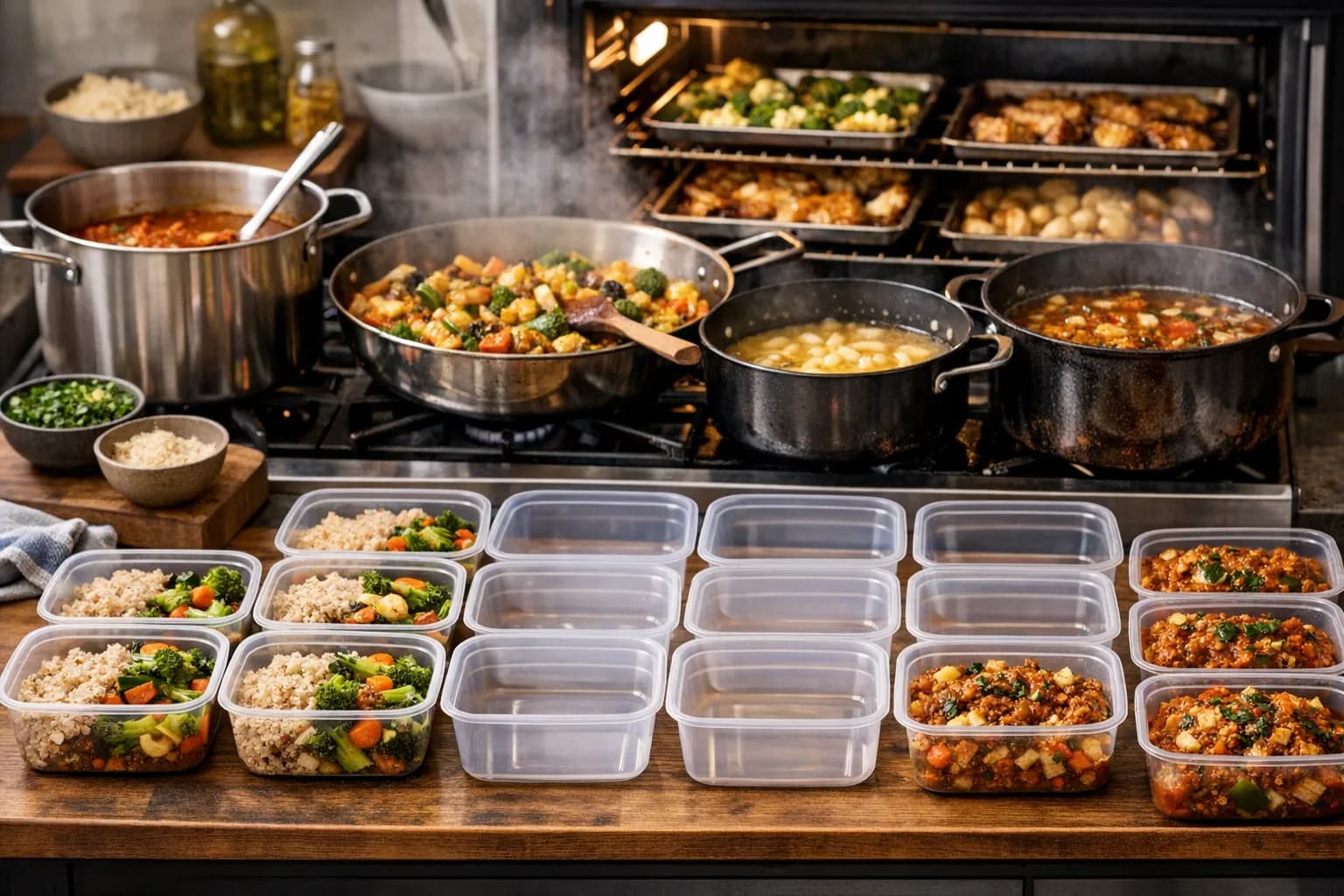
Traditional batch prep asks you to spend three to four hours on a Sunday cooking everything for the week. That is effective, but it is also exhausting and requires a level of commitment most busy people cannot sustain.
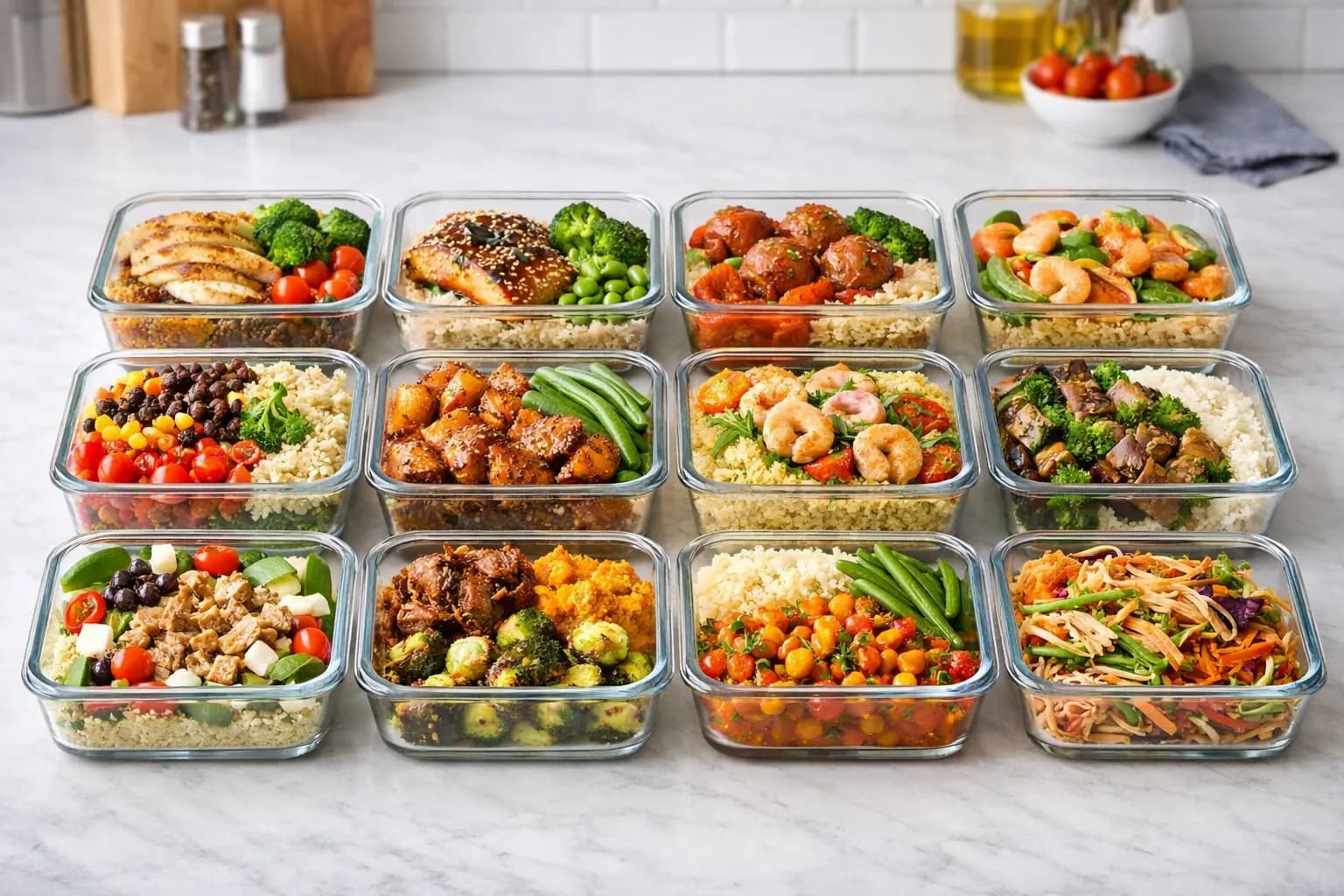
A better approach is what I call micro-prep: spending 20 to 30 minutes after your weekly grocery run doing just enough prep work to make weeknight cooking fast. Here is what that looks like:
- Wash and chop vegetables that you will use across multiple meals. Bell peppers, onions, carrots, and broccoli can all be prepped in advance and stored in containers. This single step saves the most time during the week because chopping is where most of the hands-on cooking time goes.
- Cook one batch of grains. Rice, quinoa, or farro takes 20 minutes but requires almost no active effort. A pot of cooked grain in the fridge becomes the base for three or four meals: stir-fries, grain bowls, stuffed peppers, or a side dish.
- Marinate one protein. If you know you are making chicken on Tuesday, mix the marinade and put the chicken in it right after you get home from the store. By Tuesday, the chicken is deeply flavored and all you have to do is cook it.
- Portion snacks. If your household goes through snacks, take five minutes to divide them into grab-and-go portions. This is not essential for meal planning, but it reduces the number of small decisions you have to make during the week.
That is it. You are not cooking full meals. You are doing the tedious prep work that makes actual cooking take 15 to 20 minutes instead of 40.
The Role of AI in Speeding Up Meal Planning
One of the biggest time sinks in meal planning is recipe selection. Scrolling through websites, filtering by ingredients you have on hand, trying to find something new that is also quick and that your family will actually eat. This is where AI-powered tools genuinely save time.
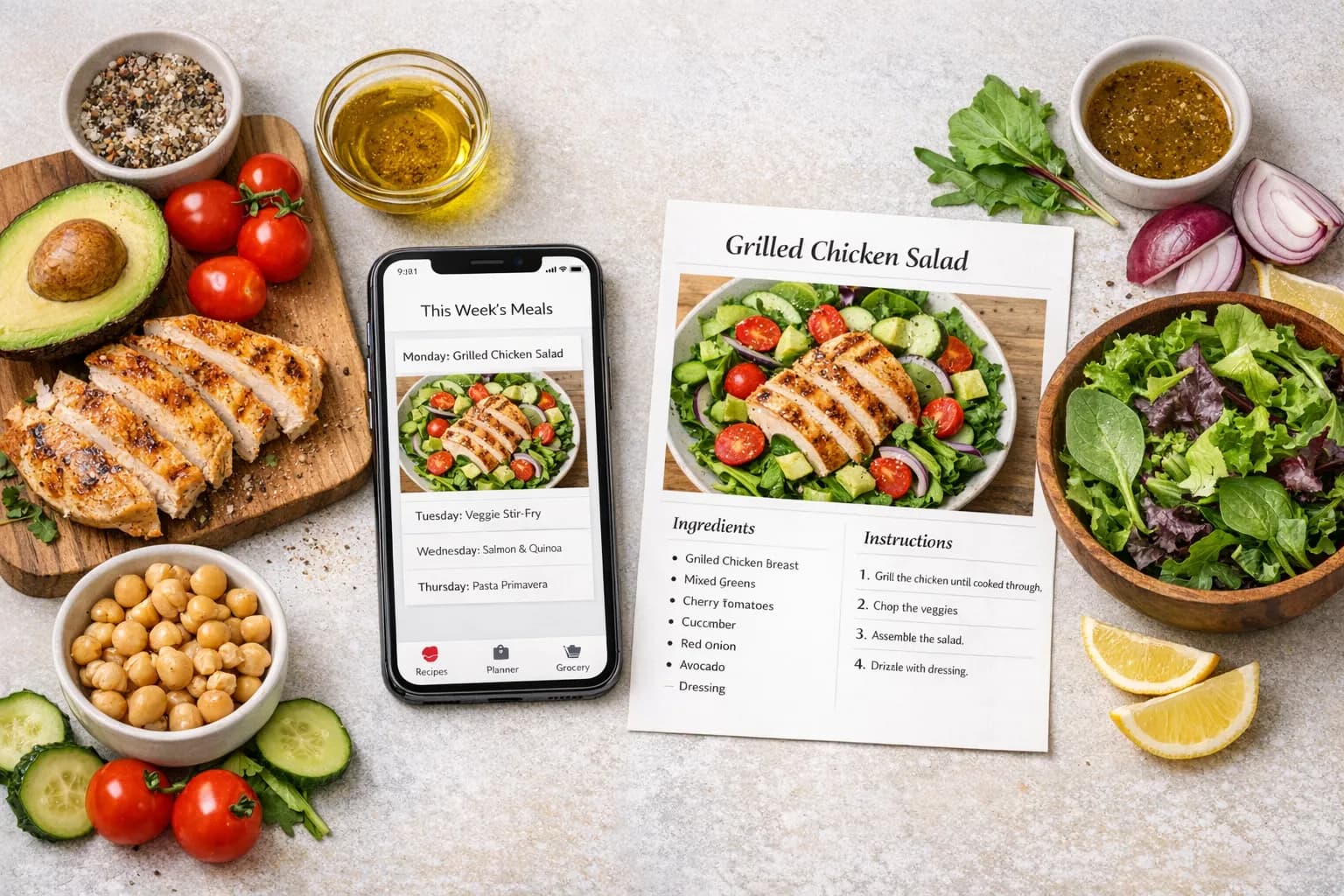
An AI meal planner can generate a full week of meals based on your dietary preferences, the number of people you are feeding, and how much time you have to cook. Instead of spending ten minutes looking for recipes, you spend thirty seconds describing what you need and get a complete plan with ingredients and instructions.
This is especially useful for the "2 new or semi-new meals" slot in the 15-Minute Method. Your anchor meals and easy nights do not need recipe hunting. But finding two fresh ideas that match your constraints every single week gets tedious fast. Letting AI handle that part keeps the system sustainable long-term.
If you are working within a budget, the same principles apply. A well-structured plan reduces food waste and impulse purchases, which are the two biggest budget killers in grocery shopping. For a detailed budget-focused approach, check out Weekly Meal Plan for a Family of 4 on a Budget.
Adapting the Method for Different Situations
Cooking for One
The 15-Minute Method actually works better for solo cooks because you have fewer variables. Your anchor meals can be even simpler (a big salad, eggs and toast, a grain bowl), and batch cooking a single protein on the weekend gives you meal components for most of the week.
The biggest trap for solo cooks is buying fresh ingredients in quantities that are too large and watching half of them go bad. Focus your plan around ingredients that overlap between meals, and freeze portions of anything you cook in bulk.
Cooking for a Family
The main adjustment is accounting for preferences. If you have picky eaters, your anchor meals should be things everyone will eat without complaint. Save the more adventurous recipes for nights when you have the energy to manage negotiations at the dinner table.
The leftover night becomes even more important with a family because larger meals generate more leftovers. A roast chicken on Monday becomes chicken sandwiches or chicken fried rice on Wednesday with almost no additional work.
Irregular Schedules
If your work schedule changes week to week, the flex night becomes critical. You might also want to shift from planning specific meals on specific days to maintaining a ranked list: "here are the five meals for this week, and I will cook them in whatever order makes sense based on how the week unfolds."
This is less structured, but it still gives you a grocery list and a clear set of options, which is all you really need to avoid the 6 PM scramble.
Time-Saving Tips for Weeknight Dinners
Beyond the planning itself, there are a handful of habits that cut cooking time dramatically:
Use sheet pan and one-pot meals as anchor recipes. A sheet pan dinner where everything goes on one tray and into the oven at 400 degrees for 25 minutes requires almost no skill and generates almost no dishes. One-pot pastas, soups, and stews are similarly efficient.
Learn five to seven base recipes and rotate them. You do not need to cook something new every week. A stir-fry formula, a sheet pan formula, a soup formula, a pasta formula, and a grain bowl formula cover virtually every weeknight. Swap the protein, vegetables, and sauce each time and you have variety without the cognitive load of learning new recipes.
Keep your pantry stocked with flavor shortcuts. Good olive oil, soy sauce, hot sauce, canned tomatoes, coconut milk, and a few dried spice blends let you build flavor quickly without measuring out twelve individual spices. A can of coconut milk and a tablespoon of curry paste turns any vegetable and protein combination into a curry in 20 minutes.
Double one recipe per week intentionally. Not as leftovers, but as planned reuse. Double the taco meat and use half for tacos on Tuesday and half for a burrito bowl on Thursday. Double the soup and freeze half for next week. This is the single most efficient thing you can do because you are cooking once and eating twice.
For a deeper look at estimating and converting cooking times across different methods and appliances, the Cooking Time Converter can help you adapt recipes when you want to switch between stovetop, oven, slow cooker, or Instant Pot.
A Sample Week Using the 15-Minute Method
To make this concrete, here is what an actual week might look like:
- Monday (Anchor): Stir-fry with whatever vegetables are in the fridge, served over rice from the batch you prepped. 20 minutes.
- Tuesday (New): Sheet pan sausage with roasted sweet potatoes and broccoli. 30 minutes, mostly hands-off oven time.
- Wednesday (Leftover): Leftover stir-fry reheated, or stir-fry components turned into fried rice. 10 minutes.
- Thursday (Anchor): Pasta with jarred marinara, a simple salad on the side. 15 minutes.
- Friday (Easy): Takeout or eggs and toast. Zero to 10 minutes.
- Saturday (New): A slightly more involved recipe you have been wanting to try. You have more time on the weekend, so this is the night for it.
- Sunday (Flex): Whatever you feel like. Leftovers, a frozen pizza, or cooking something spontaneous.
Notice that actual cooking effort is concentrated on four nights, two of which are dead-simple recipes you already know. That is the whole secret: reducing the number of decisions and the amount of active cooking to a level that does not feel like a burden.
Making the System Stick
The 15-Minute Method works because it is small enough to actually do. But even small habits need a trigger to become automatic. Here are three ways to anchor the habit:
-
Tie it to an existing routine. Do your 15-minute plan while drinking your Saturday morning coffee, or right after you put the kids to bed on Sunday. Attaching it to something you already do makes it feel less like a separate task.
-
Keep it imperfect. The plan does not need to be complete or optimized. A rough plan you actually follow beats a perfect plan you abandon. If you only get through two of the three steps one week, you still have a partial plan, which is vastly better than no plan.
-
Review what worked. At the end of each week, spend thirty seconds thinking about what went well and what did not. Did you overplan? Underplan? Pick meals that were too ambitious for busy nights? Small adjustments each week compound into a system that fits your life precisely.
Key Takeaway
Meal planning does not require hours of effort. The 15-Minute Method breaks it into three 5-minute steps: review what you have, plan five to seven meals using a flexible framework (2 anchors, 2 new, 1 leftover, 1 easy, 1 flex), and build a quick grocery list. Pair this with 20 to 30 minutes of micro-prep after shopping, and you have a sustainable system that eliminates the nightly dinner scramble without taking over your weekend.
Ready to simplify your meal planning?
Join UseMealPlanner and get AI-generated recipes tailored to your preferences, dietary needs, and schedule.
Download the App