Keto Meal Plan for Beginners: A 7-Day Guide With Macros and Recipes
A complete keto meal plan for beginners with a 7-day menu under 20g net carbs per day. Covers keto fundamentals, what to eat and avoid, common mistakes, and practical tips for getting started.
The ketogenic diet has moved from medical treatment to mainstream eating plan, but the volume of conflicting information online makes getting started harder than it needs to be. Some sources say eat unlimited fat. Others say count every calorie. Some list dozens of foods you must avoid while others claim you can have anything as long as it fits your macros.
If you are a beginner, you do not need a comprehensive encyclopedia of ketogenic science. You need a clear explanation of how the diet works, a concrete meal plan you can follow this week, and a list of the mistakes that trip up most first-timers. That is what this guide provides.
The 7-day meal plan below keeps daily net carbs at approximately 20 grams, which is the threshold that reliably produces ketosis for most people. Every meal uses common ingredients you can find at any grocery store, and the recipes are straightforward enough for someone who has never cooked keto before.
Keto Fundamentals: What You Need to Know
How Ketosis Works
Your body normally runs on glucose, which it gets from carbohydrates. When you restrict carbs severely — below about 20 to 50 grams of net carbs per day — your body runs out of its preferred fuel and shifts to burning fat instead. Your liver converts fatty acids into molecules called ketones, which your brain and muscles use as an alternative energy source. This metabolic state is called ketosis.
Ketosis typically begins within two to four days of restricting carbohydrates, though the timeline varies. The transition period can involve fatigue, headaches, and irritability — commonly called the "keto flu" — which usually resolves within a week as your body adapts.
The Keto Macro Ratio
A standard ketogenic diet follows this approximate macronutrient breakdown:
- Fat: 70-75% of daily calories. Fat is your primary fuel source on keto. This includes oils, butter, avocado, nuts, cheese, and fatty cuts of meat.
- Protein: 20-25% of daily calories. Enough to maintain muscle mass and support bodily functions, but not so much that excess protein converts to glucose through a process called gluconeogenesis.
- Carbohydrates: 5-10% of daily calories. This translates to roughly 20 to 50 grams of net carbs per day. Net carbs equal total carbs minus fiber, since fiber is not digested or converted to glucose.
For a 2,000-calorie diet, this means approximately 155 grams of fat, 100 grams of protein, and 20 to 25 grams of net carbs per day. These numbers serve as a starting point. You will adjust based on your results.
What to Eat on Keto
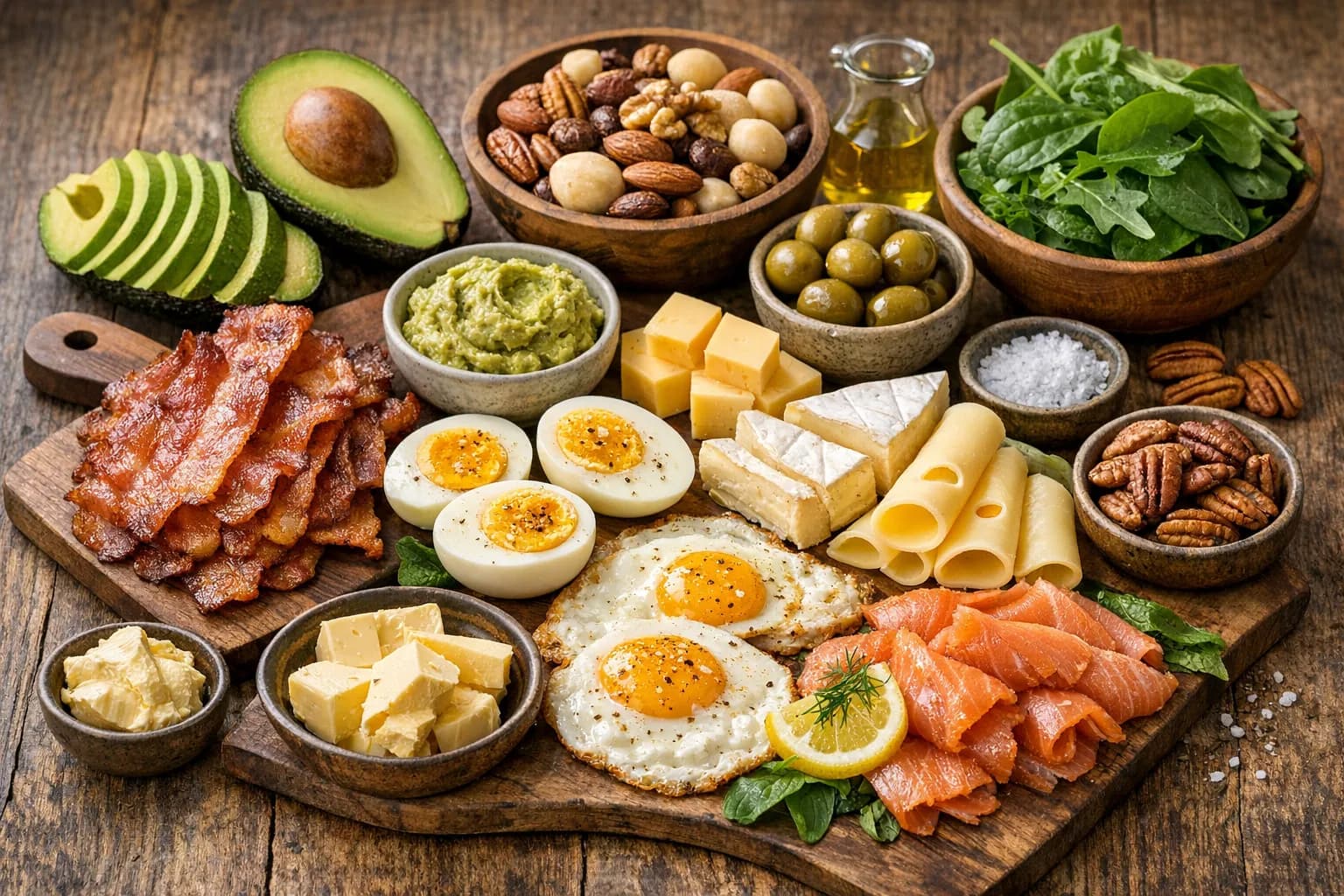
Proteins: Beef, pork, chicken (especially thighs and wings), turkey, lamb, fish (salmon, tuna, sardines, mackerel), shrimp, eggs, bacon, sausage (check labels for added sugar).
Fats and Oils: Olive oil, coconut oil, avocado oil, butter, ghee, lard, MCT oil, heavy cream, cream cheese, sour cream.
Low-Carb Vegetables: Spinach, kale, lettuce, arugula, broccoli, cauliflower, zucchini, asparagus, bell peppers (in moderation), mushrooms, green beans, Brussels sprouts, cabbage, cucumber, celery.
Dairy: Cheese (cheddar, mozzarella, brie, goat cheese, parmesan), heavy whipping cream, full-fat Greek yogurt (small amounts), butter.
Nuts and Seeds: Almonds, walnuts, pecans, macadamia nuts, chia seeds, flaxseeds, hemp seeds, pumpkin seeds (all in moderation due to calorie density).
Other: Avocado, olives, dark chocolate (85%+ cacao, sparingly), berries (small portions of raspberries, blackberries, or strawberries).
What to Avoid on Keto
Grains and Starches: Bread, pasta, rice, oats, cereal, corn, flour, tortillas, crackers, pastries.
Sugar and Sweets: Table sugar, honey, maple syrup, agave, candy, cookies, cake, ice cream, sweetened yogurt, sweetened drinks.
Most Fruits: Bananas, apples, oranges, grapes, pineapple, mango, dried fruit, fruit juice. Berries are the exception in small quantities.
Starchy Vegetables: Potatoes, sweet potatoes, corn, peas, carrots (small amounts are fine), beets, parsnips.
Beans and Legumes: Black beans, kidney beans, chickpeas, lentils. These are too carb-dense for standard keto.
Processed Foods: Most packaged snacks, chips, crackers, and anything with added sugar or high-fructose corn syrup.
When adapting non-keto recipes, you will need reliable ingredient swaps. The Ingredient Substitution Finder can suggest keto-friendly alternatives for common high-carb ingredients like flour, breadcrumbs, and sugar.
Ready to simplify your meal planning?
Join UseMealPlanner and get AI-generated recipes tailored to your preferences, dietary needs, and schedule.
Download the AppThe 7-Day Keto Meal Plan
This plan averages approximately 1,600 to 1,800 calories and 15 to 20 grams of net carbs per day. All meals serve one person. Adjust portions based on your calorie needs.
| Day | Breakfast | Lunch | Dinner |
|---|---|---|---|
| Monday | Two-egg omelet with cheddar, spinach, and mushrooms cooked in butter | Tuna salad (canned tuna, mayo, celery, dill) over mixed greens with olive oil dressing | Pan-seared salmon with roasted broccoli and a side of mashed cauliflower with butter and garlic |
| Tuesday | Bulletproof coffee (coffee blended with butter and MCT oil) plus two hard-boiled eggs | Lettuce wrap burgers: ground beef patties wrapped in butter lettuce with cheese, tomato, and mustard | Chicken thighs baked with pesto, served with sauteed zucchini in olive oil |
| Wednesday | Full-fat Greek yogurt (plain, unsweetened) topped with a handful of walnuts and a few raspberries | Leftover chicken thigh sliced over a Caesar salad (romaine, parmesan, olive oil-based dressing) | Beef stir-fry with broccoli, bell pepper, and mushrooms in soy sauce and sesame oil, served over cauliflower rice |
| Thursday | Scrambled eggs with cream cheese, chives, and smoked salmon | Avocado stuffed with chicken salad (shredded chicken, mayo, celery, salt, pepper) | Pork chops pan-seared in butter with roasted Brussels sprouts and a side salad with ranch dressing |
| Friday | Bacon and eggs: three strips of bacon and two fried eggs cooked in the bacon fat | Cobb salad: mixed greens, hard-boiled egg, bacon, avocado, blue cheese, chicken, and olive oil vinaigrette | Baked cod with lemon-butter sauce, garlic green beans, and a small side of coleslaw (mayo-based, no sugar) |
| Saturday | Keto pancakes (cream cheese, eggs, almond flour, cinnamon) topped with butter and a few sliced strawberries | Zucchini noodles with meat sauce (ground beef, crushed tomatoes, garlic, Italian seasoning) | Grilled ribeye steak with a compound butter (butter, garlic, herbs), roasted asparagus, and a simple mixed green salad |
| Sunday | Veggie frittata: eggs, bell pepper, onion, spinach, and feta cheese baked in a cast iron skillet | Soup: creamy broccoli-cheddar soup made with heavy cream and chicken broth | Lemon-herb roasted chicken leg quarters with cauliflower au gratin (cauliflower baked with heavy cream, cheddar, and garlic) |
Monday
Tuesday
Wednesday
Thursday
Friday
Saturday
Sunday
How the Macros Break Down
Each day in this plan stays within these approximate ranges:
- Net carbs: 15 to 20 grams (primarily from vegetables, nuts, and small amounts of dairy)
- Protein: 80 to 120 grams (from eggs, meat, fish, and cheese)
- Fat: 120 to 150 grams (from cooking oils, butter, avocado, cheese, and fatty cuts of meat)
The plan deliberately relies on whole foods rather than specialty keto products. You do not need almond flour bread, keto bars, or sugar-free candy to follow the ketogenic diet successfully. These products can be convenient occasionally, but they are expensive and some contain ingredients that stall progress for certain people.
Shopping List for Week One
Proteins: Eggs (2 dozen), salmon fillets (2), chicken thighs (1.5 lbs), ground beef (1.5 lbs), canned tuna (2 cans), smoked salmon (4 oz), bacon (1 lb), pork chops (2), cod fillets (2), ribeye steak (1), chicken leg quarters (2)
Produce: Spinach (1 large bag), mixed greens (1 container), romaine lettuce (1 head), butter lettuce (1 head), broccoli (2 heads), cauliflower (2 heads), zucchini (3), asparagus (1 bunch), Brussels sprouts (1 lb), green beans (1 lb), mushrooms (8 oz), bell peppers (3), celery (1 bunch), avocados (3), tomatoes (2), onion (1), garlic (1 head), lemons (2), fresh herbs (parsley, dill, chives), raspberries or strawberries (1 small container)
Dairy and Fats: Butter (1 lb), heavy cream (1 pint), cream cheese (8 oz), cheddar cheese (block, 8 oz), parmesan (4 oz), blue cheese (2 oz), feta cheese (4 oz), mozzarella (4 oz), full-fat Greek yogurt (1 small container), sour cream (8 oz), mayonnaise (1 jar)
Pantry: Olive oil, avocado oil, coconut oil or MCT oil, almond flour (small bag), walnuts (4 oz), soy sauce, sesame oil, Dijon mustard, pesto (1 jar), crushed tomatoes (1 small can), chicken broth (1 carton), ranch dressing, Italian seasoning, cinnamon
Tip
During your first week of keto, drink significantly more water than usual and add extra salt to your food. The rapid reduction in carbs causes your body to excrete water and electrolytes at a higher rate. Supplementing with sodium (salt), potassium (avocado, spinach, mushrooms), and magnesium (nuts, dark chocolate) helps prevent or reduce keto flu symptoms like headaches, fatigue, and muscle cramps.
Common Keto Mistakes and How to Avoid Them
Mistake 1: Not Eating Enough Fat
This is the most counterintuitive aspect of keto for beginners. After years of being told that fat is bad, it feels wrong to cook eggs in butter, pour olive oil over salads, and choose the fattier cut of meat. But on keto, fat is your fuel. If you restrict both carbs and fat, you will feel terrible: tired, hungry, irritable, and unable to sustain the diet.
The fix: Until you are adapted to keto (four to six weeks in), do not worry about limiting fat. Eat until you are satisfied. Add butter to vegetables. Use full-fat dressings. Choose chicken thighs over chicken breasts. Once you are in consistent ketosis and feeling energized, you can moderate fat intake if weight loss is a goal.
Mistake 2: Eating Too Much Protein
Protein is essential, but excess protein can be partially converted to glucose through gluconeogenesis, which can slow or prevent ketosis. This does not mean protein is dangerous or that you should fear it. It means that a keto meal should not look like a low-carb bodybuilding diet of lean chicken breast and egg whites.
The fix: Aim for 0.7 to 1.0 grams of protein per pound of lean body mass. For most people, this is 80 to 130 grams per day. Choose fattier cuts of meat (thighs over breasts, ribeye over sirloin, salmon over tilapia) so your protein comes packaged with fat.
Mistake 3: Ignoring Electrolytes
When you cut carbs, your kidneys excrete more sodium, which takes potassium and magnesium with it. This electrolyte depletion causes the "keto flu" symptoms that drive many beginners to quit during the first week. It is not the diet causing the problem. It is the electrolyte imbalance.
The fix: Add salt liberally to all food. Drink bone broth daily during the first two weeks. Eat avocado (high in potassium) and spinach (magnesium) regularly. Consider supplementing with 200 to 400 mg of magnesium glycinate before bed.
Mistake 4: Obsessing Over the Scale
Weight on keto fluctuates dramatically, especially in the first two weeks. You may lose 5 to 10 pounds in the first week (mostly water weight as your body depletes glycogen stores), then plateau or even gain a pound or two as your body adjusts. This is normal and not a sign that the diet has stopped working.
The fix: Weigh yourself no more than once per week, at the same time (morning, before eating). Better yet, take measurements and progress photos. Fat loss can occur without any change on the scale, especially if you are building muscle simultaneously.
Mistake 5: Falling for "Keto" Processed Foods
The market is flooded with products labeled "keto-friendly" — bars, breads, cookies, ice cream, and chips. Many of these contain sugar alcohols, artificial sweeteners, and processed ingredients that can spike insulin, cause digestive distress, and stall weight loss. The keto label does not make processed food healthy food.
The fix: Base your diet on whole foods. Meat, fish, eggs, vegetables, nuts, cheese, butter, and olive oil. If a food needs a "keto" label to convince you it fits the diet, it probably does not belong as a daily staple.
Mistake 6: Not Planning Meals in Advance
Keto fails most often not at dinner but at the moments of unplanned hunger. You are at work and the only available food is sandwiches and vending machines. You are at a party and everything is chips, crackers, and cake. You are exhausted and the easiest option is a bowl of cereal.
The fix: Plan your meals for the week. Prep keto-friendly snacks to keep at work (almonds, cheese sticks, hard-boiled eggs, olives). Always have an emergency option available. The meal plan above gives you a full week of structured eating that eliminates the decision fatigue that leads to off-plan choices.
Adapting Keto to Your Life
Eating Out on Keto
Most restaurants can accommodate keto with minor modifications. Order burgers without the bun. Ask for vegetables instead of fries or rice. Choose grilled meats and fish with butter-based sauces. Salads with protein are almost always safe if you skip croutons and use oil-based dressings. Mexican restaurants offer fajitas without tortillas. Sushi restaurants have sashimi.
The key is not to feel awkward about modifying your order. Restaurants handle dietary requests routinely. A simple "Can I get steamed broccoli instead of the mashed potatoes?" is all it takes.
Keto on a Budget
Keto has a reputation for being expensive, but it does not have to be. Eggs are one of the cheapest protein sources available and are a keto staple. Chicken thighs cost half as much as chicken breasts and are fattier, which is exactly what keto calls for. Canned tuna, ground beef, cabbage, frozen broccoli, and butter are all affordable keto-friendly foods.
The expensive version of keto involves grass-fed steaks, wild-caught salmon, and organic everything. The budget version involves eggs, thighs, canned fish, frozen vegetables, and store-brand cheese. Both work equally well for achieving and maintaining ketosis.
Exercise on Keto
During the first two to four weeks, you may notice reduced exercise performance, especially for high-intensity activities. This is normal. Your body is transitioning fuel systems, and it takes time for your muscles to become efficient at burning ketones and fatty acids.
Maintain your exercise routine but reduce intensity by 10 to 20 percent during the adaptation period. Once adapted, most people report stable or improved endurance performance. Strength training performance typically returns to baseline within four to six weeks.
Keto and Long-Term Health Goals
The ketogenic diet is a tool, not a permanent lifestyle requirement. Some people thrive on keto indefinitely. Others use it for three to six months to achieve a specific weight loss goal and then transition to a moderate low-carb diet (50 to 100 grams of carbs per day) for maintenance.
If your primary goal is weight loss, keto can be highly effective because it naturally reduces appetite, stabilizes blood sugar, and forces your body to use stored fat as fuel. For a broader perspective on using meal planning as a weight loss strategy, see Healthy Meal Planning for Weight Loss.
Whatever your approach, the most important factor is sustainability. A diet you follow consistently for six months will always produce better results than a perfect diet you abandon after two weeks. If strict keto at 20 grams of net carbs feels unsustainable, try a liberal keto approach at 50 grams. If daily tracking feels burdensome, simplify by following a structured meal plan like the one above and trusting that the macros are already balanced.
Key Takeaway
A ketogenic diet works by restricting carbohydrates to 20 to 50 grams of net carbs per day, shifting your body into a fat-burning state called ketosis. The 7-day meal plan above provides a concrete starting point with approximately 20 grams of net carbs daily, built entirely from whole foods. Success on keto depends on eating enough fat, maintaining electrolyte balance (extra salt, potassium, and magnesium), avoiding processed "keto" foods, and planning meals in advance so unplanned hunger does not derail your progress. Start with a structured week, observe how your body responds, and adjust from there.
Ready to simplify your meal planning?
Join UseMealPlanner and get AI-generated recipes tailored to your preferences, dietary needs, and schedule.
Download the App